Have you ever walked into a beautifully lit living room and wondered how a single fixture could provide both elegant illumination and comfortable airflow? The secret lies in choosing the best ceiling fans with integrated lighting systems that serve dual purposes without compromising style or functionality. Modern living rooms demand fixtures that combine aesthetic appeal with practical performance, and the best ceiling fans equipped with advanced LED lighting deliver precisely that combination. This comprehensive guide explores everything homeowners need to know about selecting, installing, and maximizing ceiling fan lighting solutions that elevate living room environments.
Why Living Rooms Need Best Ceiling Fans With Integrated Lighting
Living rooms function as multi-purpose spaces where families gather, guests socialize, and daily activities unfold throughout varying lighting conditions. Best ceiling fans with built-in lighting eliminate the need for separate ceiling fixtures, freeing up valuable space while providing both ambient illumination and climate control from a single installation point. This dual functionality proves especially valuable in apartments, condos, and homes with lower ceiling heights where multiple fixtures create visual clutter and overwhelm the space.
Energy efficiency represents another compelling advantage of best ceiling fans featuring integrated LED lighting. These fixtures consume 64% less electricity than conventional fans with standard bulbs while delivering superior brightness and longevity. The combination of efficient air circulation and quality lighting allows homeowners to reduce reliance on central HVAC systems and additional lamps, translating to substantial utility savings over time.
Understanding Different Lighting Configurations in Best Ceiling Fans
Integrated LED Lighting Systems
Best ceiling fans with integrated LED systems feature lighting components built directly into the fan housing during manufacturing, creating seamless designs that appear purpose-built rather than assembled from separate parts. These permanent installations offer exceptional longevity with LED modules lasting 25,000 to 50,000 hours before requiring replacement. Integrated designs eliminate compatibility concerns since every component originates from the same manufacturer with coordinated engineering.
The streamlined appearance of integrated LED best ceiling fans complements contemporary and minimalist living room designs where clean lines and uncluttered aesthetics take priority. Many integrated systems include TrueLight technology that delivers consistent color rendering and adjustable brightness levels perfect for various activities from reading to entertaining guests.hunterfan
Light Kit Attachments and Add-On Options
Best ceiling fans designed as light kit adaptable models allow homeowners to add compatible lighting fixtures after initial fan installation. This flexibility proves valuable when upgrading existing fans or customizing lighting styles to match evolving interior design preferences. Light kits attach to the fan housing through standardized mounting plates with electrical connections that integrate with the fan’s wiring system.
Universal light kits offer broad compatibility across multiple fan brands, though manufacturer-specific kits typically provide better aesthetic cohesion and guaranteed fitment. Best ceiling fans accepting add-on kits feature removable center caps that reveal wiring and mounting hardware specifically designed for light attachment.
Downlight Versus Uplight Designs
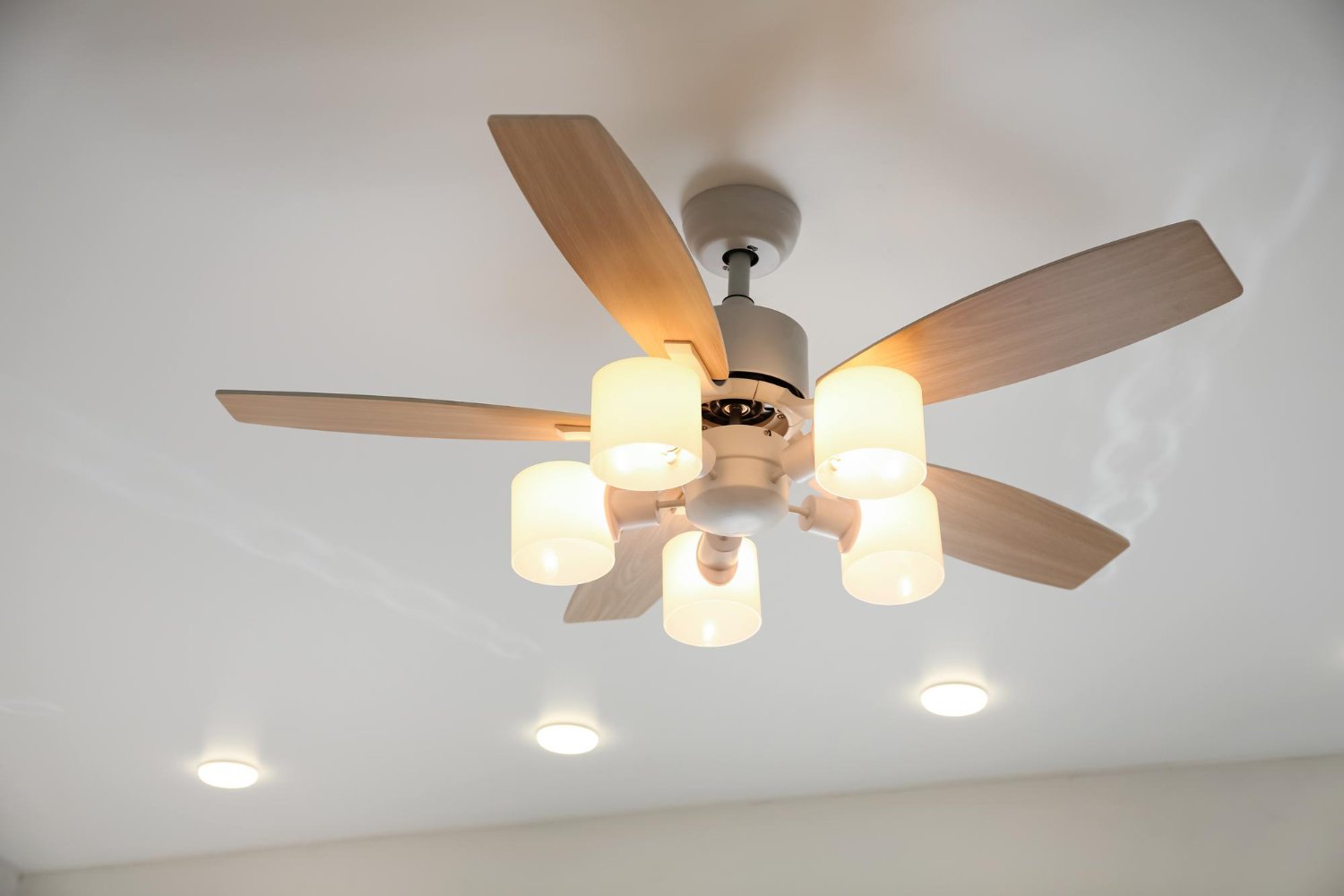
Downlight configurations in best ceiling fans direct illumination toward the floor, providing focused task lighting ideal for reading areas, conversation zones, and activity spaces within living rooms. Bowl-style downlights create soft, diffused illumination that minimizes harsh shadows while branched or stemmed fixtures with multiple bulbs offer brighter, more directional lighting.
Uplight designs bounce illumination off ceiling surfaces to generate ambient glow throughout living rooms. This indirect lighting approach creates comfortable, shadow-free environments perfect for television viewing and relaxation. Some best ceiling fans incorporate both uplight and downlight elements for layered lighting effects that adapt to different times of day and activities.
Lumens and Brightness Requirements for Living Room Best Ceiling Fans
Living room lighting demands typically range from 1,500 to 3,000 total lumens depending on room dimensions and natural light availability. Best ceiling fans for standard living rooms between 200-400 square feet should provide 10-20 lumens per square foot to achieve comfortable ambient lighting without harsh glare. Larger open-concept spaces require higher lumen outputs or multiple fixtures to ensure adequate illumination coverage.
The best ceiling fans with adjustable brightness controls allow homeowners to modify light intensity throughout the day, using higher settings for daytime activities and dimmer levels for evening relaxation. LED bulbs in the 800-1,200 lumen range work well for general living room illumination when distributed across multiple bulbs in branched light kits. Integrated LED systems in the best ceiling fans often produce 2,000-4,000 lumens from single fixtures, providing ample brightness for most residential living spaces.
Color temperature selection significantly impacts living room ambiance, with warm white LEDs around 2700-3000K creating cozy, inviting atmospheres while neutral white options near 4000K offer crisp, energizing illumination. The best ceiling fans feature tunable white LED systems, allowing adjustment between warm and cool temperatures to match activities and personal preferences.
Fandelier Options Among Best Ceiling Fans
Fandeliers represent a distinctive category of best ceiling fans that combine chandelier elegance with functional air circulation, creating dramatic focal points in living rooms. These hybrid fixtures feature multiple decorative light elements arranged around the fan motor, often incorporating crystal accents, globe shades, or artistic glass designs that rival standalone chandeliers in visual impact.
The best ceiling fans in the fandelier category maintain proper airflow performance despite their ornate appearance, using efficient blade designs that complement rather than interfere with lighting elements. Modern fandeliers accommodate spaces where traditional ceiling fans seem too casual while standalone chandeliers fail to address air circulation needs. These versatile best ceiling fans work particularly well in formal living rooms, great rooms with high ceilings, and open-concept spaces where the fixture serves as an architectural statement.
Dimmable LED bulbs in fandelier-style best ceiling fans enable precise ambiance control, transitioning from bright task lighting during daytime to soft accent lighting for evening entertainment. The combination of decorative lighting and functional cooling makes fandeliers among the most versatile best ceiling fans for homeowners seeking both form and function.
Comparing Best Ceiling Fans With Lighting Features
| Feature Category | Basic Models | Mid-Tier Models | Premium Models |
|---|---|---|---|
| Light Type | CFL or standard LED | Integrated LED | Advanced integrated LED |
| Lumen Output | 800-1,500 lumens | 1,500-3,000 lumens | 3,000-5,000+ lumens |
| Color Temperature | Fixed warm white | Fixed or 2-step adjustable | Fully tunable white + RGB |
| Dimming Capability | Limited or none | Standard dimming | Full-range dimming + scenes |
| Light Kit Options | Add-on compatible | Add-on or integrated | Integrated exclusive designs |
| Bulb Replacement | Standard bulbs | LED modules | Long-life integrated LEDs |
| Control Methods | Wall switch only | Wall switch + remote | Switch + remote + app control |
| Energy Efficiency | Standard | ENERGY STAR | ENERGY STAR + advanced sensors |
| Design Styles | Basic bowl or branched | Contemporary options | Designer + fandelier styles |
Installation Considerations for Living Room Best Ceiling Fans
Living room ceiling fans require proper electrical box support rated for dynamic loads between 50-70 pounds to ensure safe operation. Best ceiling fans with substantial lighting fixtures add considerable weight beyond basic fan-only models, making structural support particularly critical. Ceiling boxes specifically rated for fan installation include reinforced mounting brackets that distribute weight across ceiling joists rather than relying solely on drywall attachment.paclights
Ceiling height dramatically influences both performance and safety of the best ceiling fans installed in living rooms. Optimal blade-to-floor clearance measures 8-9 feet, providing effective air circulation without creating safety hazards. Living rooms with standard 8-foot ceilings benefit from hugger or flush-mount ceiling fans that attach directly to ceiling boxes without downrods. Rooms with vaulted or high ceilings require extended downrods to position blades at the proper height, with many of the best ceiling fans including adjustable downrod options for various configurations.
Electrical wiring for the best ceiling fans with lighting requires separate circuits for fan motor and light fixture controls, allowing independent operation of each function. Standard installations involve connecting black wires for hot circuits, white wires for neutral returns, and green or bare copper wires for grounding. Homeowners uncertain about electrical work should consult licensed electricians to ensure code-compliant installations that maintain safety and warranty coverage.
Style Selections in Best Ceiling Fans for Living Room Decor
Modern and Contemporary Designs
Modern best ceiling fans feature clean lines, minimalist blade designs, and integrated LED lighting that disappears into the overall aesthetic. Sleek black finishes, brushed nickel accents, and geometric shapes characterize contemporary styles that complement updated living room decor. These best ceiling fans often incorporate remote control or smart home connectivity rather than visible pull chains that interrupt visual flow.youtubehunterfan
Traditional and Transitional Styles
Traditional best ceiling fans incorporate classic elements like ornate motor housings, wooden blades, and decorative light fixtures with glass shades or fabric drum covers. Transitional designs bridge traditional and contemporary aesthetics, offering versatile best ceiling fans that adapt to various living room styles. Oil-rubbed bronze, antique brass, and weathered wood finishes provide timeless appeal that coordinates with existing furniture and architectural details.consumerreports+2
Rustic and Industrial Options
Rustic modern best ceiling fans combine reclaimed wood blades with metal finishes like galvanized steel or matte black powder coating. These designs incorporate Edison-style bulbs, caged light fixtures, and exposed hardware that celebrate industrial aesthetics while providing modern performance. The best ceiling fans in rustic categories work exceptionally well in farmhouse-style living rooms, loft spaces, and homes with exposed beam ceilings.
Control Options for Best Ceiling Fans With Lighting
Wall control systems for the best ceiling fans range from simple on-off switches to sophisticated multi-function panels that independently adjust fan speed, direction, and lighting intensity. Slide controls provide variable speed adjustment while separate dimmer switches modify light brightness, giving homeowners precise environmental control. The best ceiling fans designed for living rooms include integrated control modules that coordinate fan and light functions through a single interface.
Remote control systems eliminate the need for wall-mounted switches, offering convenience particularly valuable in living rooms with complex furniture arrangements where accessing wall controls proves inconvenient. Handheld remotes typically provide fan speed adjustment, direction reversal, and light dimming from anywhere within the room. Many of the best ceiling fans include remote controls as standard equipment, with signals transmitted through radio frequency for reliable operation.
Smart home integration represents the most advanced control method available in the best ceiling fans, allowing smartphone app operation, voice assistant commands through Alexa or Google Assistant, and automation scheduling based on time or occupancy. Wi-Fi enabled best ceiling fans integrate into broader home automation systems, responding to temperature sensors, motion detection, and programmed scenes that coordinate lighting and airflow. These connected fixtures exemplify how best ceiling fans continue evolving to meet modern lifestyle expectations.
Energy Efficiency Standards in Best Ceiling Fans
ENERGY STAR certification identifies best ceiling fans meeting strict efficiency criteria established by the Environmental Protection Agency. Certified models move air 20% more efficiently than conventional fans while integrated lighting consumes 30% less electricity than standard fixtures. The best ceiling fans bearing ENERGY STAR labels undergo independent testing to verify performance claims before receiving certification.lightology
DC motor technology in the best ceiling fans delivers superior efficiency compared to traditional AC motors, consuming 40-70% less electricity while generating equivalent or better airflow. Combined with LED lighting that uses 75% less energy than incandescent bulbs, the best ceiling fans equipped with these technologies significantly reduce operating costs throughout their service lives. Hunter’s ENERGY STAR-certified models demonstrate 64% higher efficiency on average than conventional ceiling fans, illustrating the substantial improvements modern engineering achieves.
Reversible operation enhances year-round efficiency of best ceiling fans by circulating heated air downward during winter months, allowing homeowners to lower thermostat settings while maintaining comfort. Summer operation creates wind chill effects that make rooms feel 4-6 degrees cooler without additional air conditioning, further reducing energy consumption. The best ceiling fans maximize these seasonal benefits through easily accessible reverse switches and clear operational guidance.thisoldhouse
Maintenance Requirements for Best Ceiling Fans With Lighting
Regular cleaning maintains both performance and appearance of best ceiling fans installed in living rooms where dust accumulation occurs rapidly. Wipe fan blades monthly using microfiber cloths or specialized blade cleaners that capture dust without spreading it throughout the room. Light fixtures in best ceiling fans require cleaning to maintain brightness levels, with glass globes and shades removed periodically for thorough washing.paclights
LED replacement in best ceiling fans varies by design, with integrated systems requiring module replacement after 20,000-50,000 hours of operation while light kit models accept standard LED bulb replacements. The best ceiling fans using replaceable bulbs provide greater flexibility for adjusting brightness or color temperature as preferences evolve. Integrated LED designs in best ceiling fans reduce maintenance frequency since bulb replacement occurs far less often than with traditional lighting.dwellifyhome
Balance issues occasionally develop in best ceiling fans when blade weights shift or mounting hardware loosens. Address wobbling immediately by checking mounting bracket security and using blade balancing kits included with quality models. The best ceiling fans maintain stable operation for years when properly installed on structurally sound ceiling boxes with secure connections.paclights
Selecting Best Ceiling Fans Based on Living Room Size
Small living rooms under 200 square feet perform well with the best ceiling fans featuring 42-48 inch blade spans and light fixtures producing 1,200-2,000 lumens. Compact designs prevent overwhelming smaller spaces while providing adequate air circulation and illumination. The best ceiling fans for cozy living areas often incorporate flush-mount designs that maximize headroom in rooms with standard ceiling heights.citylightssf
Medium living rooms between 200-400 square feet represent the most common residential size, accommodating the best ceiling fans with 52-54 inch blade spans. These standard dimensions provide optimal airflow coverage while light fixtures delivering 2,000-3,000 lumens adequately illuminate the entire space. The best ceiling fans in this size category offer the widest style selection and price ranges.
Large living rooms and great rooms exceeding 400 square feet require the best ceiling fans with blade spans between 60-72 inches to generate sufficient air movement throughout the space. Lighting requirements increase proportionally, with fixtures needing 3,000-4,000 lumens or multiple best ceiling fans strategically positioned to ensure complete coverage. Open-concept spaces may benefit from installing multiple smaller best ceiling fans rather than single oversized units to achieve balanced circulation and lighting distribution. lumens
Smart Features Transforming Best Ceiling Fans
Scheduling capabilities in smart-enabled best ceiling fans automatically adjust fan speeds and lighting throughout the day based on household routines. Program morning routines that gradually increase lighting brightness while activating fans at low speeds, then transition to higher speeds during afternoon heat. Evening schedules in best ceiling fans can dim lights and reduce fan speeds to create comfortable environments for relaxation and entertainment.
Occupancy sensors integrated into advanced ceiling fans detect movement within living rooms, automatically activating when family members enter and shutting off after the space remains empty for predetermined periods. This automation eliminates wasted energy from fans and lights left running in unoccupied rooms. The ceiling fans incorporate occupancy detection and learn household patterns over time, becoming more responsive to regular activity schedules.
Temperature-responsive operation represents another sophisticated feature available in premium ceiling fans, where built-in sensors monitor room conditions and automatically adjust fan speeds to maintain comfortable temperatures. When thermostats detect rising heat, ceiling fans increase circulation to maximize cooling effects before HVAC systems engage. This coordinated climate control reduces energy consumption while maintaining consistent comfort throughout living spaces.bigassfans
Noise Considerations in Living Room Best Ceiling Fans
Quiet operation proves essential for best ceiling fans installed in living rooms where conversation, television viewing, and relaxation activities demand minimal background noise. Premium models operate at noise levels below 35 decibels at medium speeds, comparable to soft whisper or rustling leaves. The ceiling fans achieve silent performance through precision-balanced blades, high-quality bearings, and DC motors engineered for smooth operation.
Motor quality significantly impacts noise generation in ceiling fans, with sealed permanent-split capacitor motors and brushless DC designs delivering the quietest performance. Cheaper models using basic AC motors often generate humming sounds that become intrusive during quiet activities. The ceiling fans invest in superior motor engineering that eliminates mechanical noise while maintaining powerful airflow.consumerreports
Installation quality affects operational noise in ceiling fans regardless of motor quality. Improperly secured mounting brackets create vibrations that amplify sound throughout ceiling structures. Ensure best ceiling fans are attached to structurally sound, properly reinforced ceiling boxes with all mounting hardware tightened according to manufacturer specifications. Blade balance also contributes to noise levels, with imbalanced best ceiling fans producing wobbling sounds that diminish comfort.paclights
Budget Strategies for Purchasing Best Ceiling Fans
Budget-conscious homeowners can find quality best ceiling fans with integrated lighting starting at accessible price points that deliver reliable performance. Entry-level models from reputable manufacturers include essential features like integrated LED lighting, remote control, and multi-speed operation without premium smart home connectivity. These ceiling fans provide excellent value for secondary living spaces or rental properties where advanced features aren’t necessary.youtubedwellifyhome
Mid-range ceiling fans offer optimal balance between features, quality, and affordability, typically including ENERGY STAR certification, attractive design options, and comprehensive warranties. This price tier encompasses the widest selection of ceiling fans suitable for primary living rooms where daily use justifies investing in better motors, lighting systems, and aesthetic appeal. Quality brands in this category deliver performance and longevity that justify higher initial costs through reduced replacement needs.consumerreports+1
Premium ceiling fans command higher prices but provide superior engineering, exclusive designs, and advanced automation features that transform living environments. Luxury models incorporate commercial-grade motors, designer aesthetics, and comprehensive smart home integration that appeals to technology enthusiasts and design-focused homeowners. The ceiling fans at premium price points represent long-term investments in home comfort and value.lightology
Frequently Asked Questions About Best Ceiling Fans With Lighting
What size ceiling fan with lights works best for average living rooms?
Ceiling fans for typical living rooms between 200-400 square feet should feature 52-54 inch blade spans with integrated lighting producing 2,000-3,000 lumens. This combination provides adequate air circulation and illumination for most residential spaces without overwhelming the room or creating excessive energy consumption. citylightssf
Can I add lighting to an existing ceiling fan?
Many best ceiling fans accept add-on light kits if they feature light-kit-adaptable designs with removable center caps and appropriate wiring. Universal light kits offer compatibility across multiple brands, though manufacturer-specific options ensure better aesthetic integration. Verify compatibility before purchasing light kits for existing ceiling fans.energystar
How bright should living room ceiling fan lights be?
Living room ceiling fans should provide 10-20 lumens per square foot for comfortable ambient lighting. Standard 300-square-foot living rooms require 3,000-6,000 total lumens, achievable through integrated LED systems or multiple-bulb light kits in quality ceiling fans.
Are LED lights in ceiling fans replaceable?
Integrated LED systems in best ceiling fans feature long-life modules lasting 25,000-50,000 hours but typically require professional replacement when they eventually fail. Best ceiling fans with traditional light kits accept standard LED bulb replacements that homeowners can change easily.dwellifyhome
Do ceiling fans with lights use much electricity?
Energy-efficient ceiling fans with LED lighting consume remarkably little electricity, typically 20-50 watts total for fan motor and lights combined at medium settings. ENERGY STAR certified best ceiling fans use 64% less energy than conventional models while providing equivalent or superior performance.lightology
Should living room ceiling fan lights face up or down?
Downward-facing lights in ceiling fans provide brighter, more focused illumination ideal for activity areas and reading zones. Upward-facing fixtures create ambient glow by reflecting light off ceiling surfaces, suitable for television viewing and relaxation. The ceiling fans for living rooms typically use downward configurations.paclights
Can smart ceiling fans be controlled without apps?
Smart-enabled best ceiling fans maintain traditional control methods, including wall switches, remote controls, and pull chains, even when smart features aren’t actively used. Smartphone apps and voice control represent additional convenience options rather than exclusive control methods in quality ceiling fans.
How often should I clean living room ceiling fans?
Monthly blade cleaning maintains optimal performance and appearance of the ceiling fans in living rooms, where dust accumulates rapidly. Light fixtures require cleaning every 2-3 months to prevent brightness reduction from dust buildup. Regular maintenance extends the service life of ceiling fans while ensuring efficient operation.