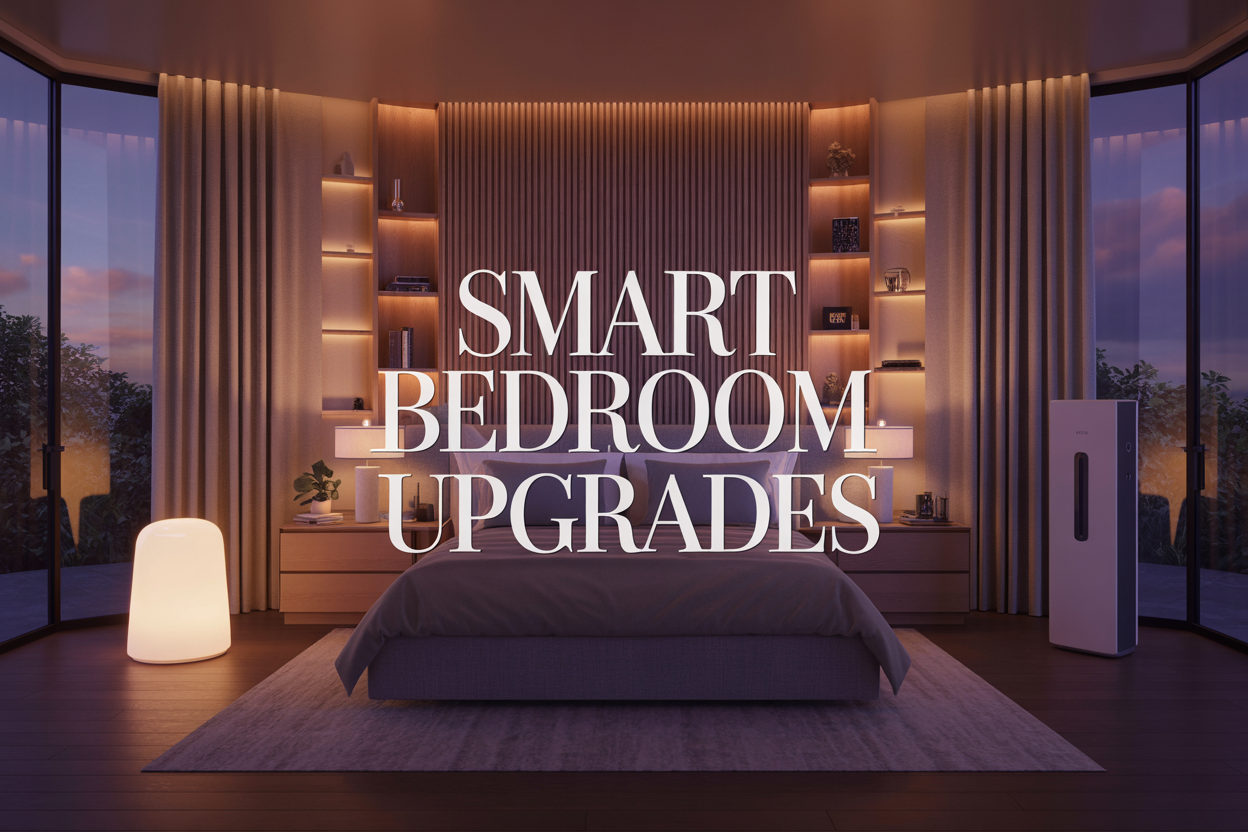
Satisfying Bedroom Gadgets: Your bedroom should be your personal sanctuary, but outdated tech and clunky gadgets can turn your sleep space into a frustration zone. This guide covers the best smart bedroom gadgets and bedroom technology upgrades that actually make a difference in your daily life.
This comprehensive overview is designed for homeowners ready to create a more comfortable, efficient, and relaxing bedroom environment. You’ll discover practical solutions that work with your existing setup and budget.
We’ll explore smart lighting solutions that help you wind down naturally and wake up refreshed. You’ll also learn about climate control gadgets that maintain perfect sleep conditions year-round. Plus, we’ll cover charging and connectivity solutions that eliminate that messy tangle of cords on your nightstand once and for all.
Smart Sleep Enhancement Technology
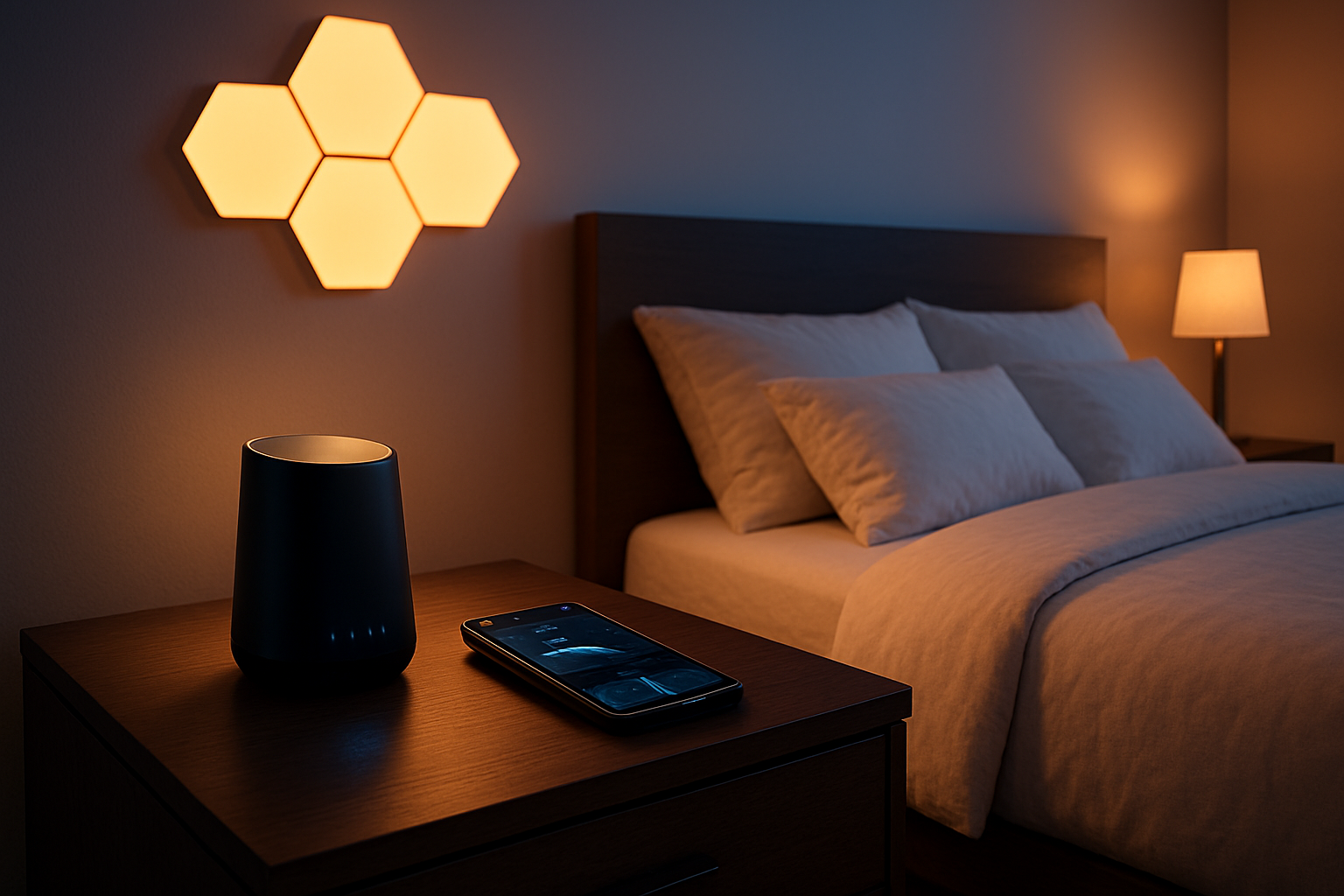
Sleep tracking devices that monitor your rest quality
Sleep tracking technology has come a long way from simple step counters. Today’s devices offer detailed insights into your sleep patterns, helping you understand what’s actually happening during those precious eight hours. These gadgets don’t just tell you how long you slept – they break down your sleep stages, monitor movement, track heart rate variability, and even detect breathing patterns.
Wearable sleep trackers like the Oura Ring or Fitbit Sense provide comprehensive sleep analysis without feeling bulky on your wrist or finger. The Oura Ring, in particular, has gained popularity among sleep optimization enthusiasts because it tracks body temperature fluctuations throughout the night, which can indicate optimal sleep timing and recovery status. These devices measure REM sleep, deep sleep, and light sleep phases, giving you a complete picture of your rest quality.
Smart mattress sleep sensors offer another approach. Products like the Sleep Number SleepIQ system or the Eight Sleep Pod integrate directly with your mattress to monitor sleep without wearing anything at all. These systems track movement, heart rate, and breathing patterns through sensors embedded in the mattress itself. The data they collect often proves more accurate than wrist-worn devices since they’re not affected by arm movement or positioning during sleep.
What makes modern sleep tracking particularly valuable is the actionable insights these devices provide. Instead of just showing you slept poorly, they identify specific factors that might be affecting your rest. Did you go to bed too late? Was your bedroom too warm? Did you have too much screen time before bed? Many trackers now correlate sleep data with daily activities, helping you identify patterns that impact your rest quality.
The most advanced sleep tracking systems integrate with smart home technology. Your sleep tracker can communicate with your thermostat to adjust bedroom temperature, dim smart lights automatically, or even trigger your coffee maker when you enter light sleep in the morning. This creates a seamless sleep environment that adapts to your natural rhythms.
Sleep tracking apps have also evolved beyond basic monitoring. Apps like Sleep Cycle use your phone’s accelerometer to detect movement and wake you during lighter sleep phases, making mornings feel less groggy. More sophisticated options like AutoSleep for Apple Watch or Sleep as Android provide detailed analytics, sleep debt calculations, and personalized recommendations for improving rest quality.
White noise machines for deeper sleep cycles
White noise machines create a consistent sound environment that masks disruptive background noises, helping your brain maintain deeper sleep throughout the night. The science behind white noise is straightforward – it provides a steady audio blanket that prevents your brain from being jolted awake by sudden sounds like traffic, neighbors, or a partner’s snoring.
Traditional white noise machines generate static-like sounds, but modern devices offer much more variety. Brown noise provides deeper, more rumbling tones that many people find more soothing than traditional white noise. Pink noise, which emphasizes lower frequencies, has been shown in studies to potentially improve memory consolidation during sleep. Some machines also offer nature sounds like rain, ocean waves, or forest ambiance for those who prefer organic audio environments.
The LectroFan series represents the gold standard in dedicated white noise machines. These devices produce true white noise through electronic generation rather than looped recordings, ensuring the sound never repeats and becomes predictable to your brain. The consistency is crucial – any variation or loop in the sound can actually become disruptive once your brain recognizes the pattern.
Smart white noise machines add connectivity features that traditional models lack. The Hatch Restore combines white noise generation with smart lighting and can be controlled through smartphone apps. You can schedule different sounds for different times of night, gradually fade volume as you fall asleep, or integrate with other smart home devices for a complete sleep routine.
For apartment dwellers or those dealing with thin walls, white noise machines can be particularly transformative. They’re especially effective at masking intermittent sounds – the type of unpredictable noise that’s most likely to disrupt sleep cycles. A garbage truck rumbling by at 5 AM or upstairs neighbors walking around becomes much less noticeable against a backdrop of consistent sound.
The placement and volume of your white noise machine matters significantly. Position it between your bed and the main source of disruptive noise, and set the volume just loud enough to mask unwanted sounds without being intrusive. Many people make the mistake of setting white noise too loud, which can actually harm sleep quality and potentially damage hearing over time.
Some white noise machines now incorporate sleep timer functions and gradual volume adjustment. The machine can start at a higher volume to help you fall asleep, then automatically reduce to a lower level for maintenance throughout the night. This prevents the machine from becoming a sleep crutch while still providing the masking benefits when you need them most.
Smart mattress toppers with temperature control
Temperature regulation during sleep plays a crucial role in achieving deep, restorative rest. Your body naturally drops in temperature as you prepare for sleep, and maintaining an optimal sleeping temperature throughout the night can significantly improve sleep quality. Smart mattress toppers with temperature control technology address this need by allowing precise climate management for your sleep surface.
The Eight Sleep Pod Pro Cover represents the cutting edge of sleep temperature technology. This smart mattress topper uses a network of water tubes and sensors to actively heat or cool different zones of your bed. Each side can be controlled independently, solving the age-old problem of couples with different temperature preferences. The system learns your sleep patterns and automatically adjusts temperature throughout the night to optimize each sleep phase.
Active cooling technology in these toppers works through thermoelectric cooling elements or water circulation systems. Unlike passive cooling materials that simply wick away heat, active systems can actually lower the surface temperature below room temperature. This is particularly beneficial for hot sleepers or those going through hormonal changes that affect body temperature regulation.
The ChiliPad and BedJet systems offer alternative approaches to sleep temperature control. The ChiliPad uses a water circulation system similar to the Eight Sleep but focuses primarily on temperature control rather than comprehensive sleep tracking. BedJet takes a different approach, using forced air to create climate control under your sheets. This system can provide both heating and cooling while also offering gentle air circulation that some users find soothing.
Smart temperature control extends beyond simple heating and cooling. Advanced systems can detect when you’re entering different sleep phases and adjust temperature accordingly. During deep sleep, when your body temperature naturally drops, the system might provide slight warming. As you approach morning wake time, it can gradually cool the surface to support natural awakening.
The health benefits of proper sleep temperature extend beyond comfort. Studies show that sleeping in environments that are too hot can reduce REM sleep and deep sleep phases. Smart mattress toppers help maintain the optimal sleep temperature range of 60-67°F (15-19°C) for most people, though individual preferences can vary significantly.
Installation and maintenance of smart mattress toppers vary by system. Water-based systems require initial setup and periodic maintenance to prevent bacterial growth and ensure optimal performance. Air-based systems typically have fewer maintenance requirements but may be more noticeable due to the air circulation components.
Energy efficiency has become an important consideration for smart mattress toppers. Modern systems use advanced insulation and smart scheduling to minimize power consumption while maximizing comfort. Many can be programmed to pre-cool or pre-heat the bed before your typical sleep time, then maintain temperature with minimal energy use throughout the night.
Light therapy lamps for better circadian rhythms
Circadian rhythm regulation through light therapy has gained significant scientific backing as an effective way to improve sleep quality and overall health. Light therapy lamps designed for bedroom use can help reset your internal clock, combat seasonal affective disorder, and create more consistent sleep-wake cycles.
The science behind light therapy centers on how light exposure affects melatonin production and other hormonal cycles. Bright light exposure in the morning signals your brain to suppress melatonin production and increase alertness. Conversely, reducing blue light exposure in the evening allows melatonin levels to rise naturally, promoting sleepiness.
Wake-up light alarm clocks simulate natural sunrise by gradually increasing light intensity over 20-45 minutes before your set wake time. The Philips Wake-Up Light series offers various models with different brightness levels and color options. These devices can make waking up feel more natural, especially during darker months when sunrise occurs after your wake time.
Full-spectrum light therapy lamps provide broader therapeutic benefits beyond wake-up assistance. These devices typically produce 10,000 lux of bright light – significantly more intense than regular room lighting – and can be used for 15-30 minutes in the morning to help reset circadian rhythms. The Verilux HappyLight series and Carex Day-Light Classic represent popular options for therapeutic light exposure.
Smart light therapy systems integrate with other bedroom technology for comprehensive circadian support. The Hatch Restore combines light therapy with sound therapy and can be programmed for both evening wind-down routines and morning wake-up sequences. These systems can automatically adjust color temperature throughout the day – warmer, redder light in the evening and cooler, bluer light in the morning.
Red light therapy devices focus on evening use and sleep preparation. Red light has minimal impact on melatonin production, making it ideal for reading or other pre-sleep activities. Some devices combine red light therapy with other relaxation features, creating a complete evening routine that supports natural sleep onset.
The timing of light therapy is crucial for effectiveness. Morning light exposure should occur within the first hour of waking for maximum circadian impact. Evening light therapy (using red or very dim warm light) should begin 1-2 hours before intended sleep time. Consistency in timing helps establish stronger circadian rhythms over time.
Seasonal considerations make light therapy particularly valuable during fall and winter months when natural light exposure is limited. Many people experience circadian rhythm disruption during darker months, leading to difficulty waking up, afternoon energy crashes, and earlier evening sleepiness. Light therapy can help maintain consistent energy levels and sleep patterns year-round.
Light therapy lamps designed for bedroom use often include features like gradual dimming, multiple brightness settings, and timer functions. Some models can be controlled through smartphone apps, allowing you to adjust settings without getting out of bed. The most advanced systems can integrate with sleep tracking devices to automatically adjust timing based on your actual sleep patterns rather than preset schedules.
Safety considerations for light therapy include avoiding direct eye contact with high-intensity lights and starting with shorter exposure times to assess individual sensitivity. People with certain eye conditions or those taking light-sensitizing medications should consult with healthcare providers before beginning light therapy routines.
Automated Comfort and Convenience Solutions
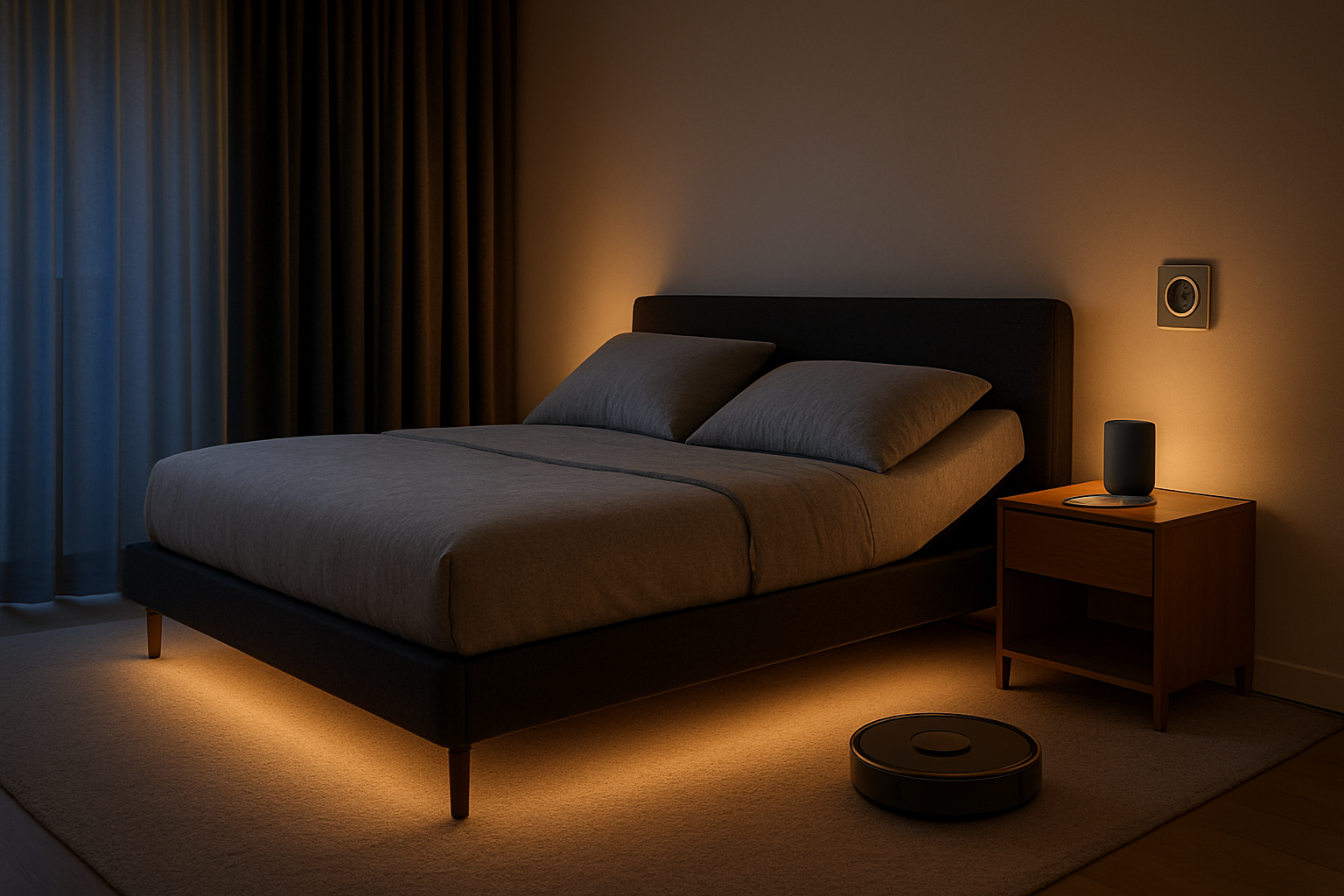
Voice-Controlled Lighting Systems for Hands-Free Operation
Picture walking into your bedroom after a long day, arms full of laundry or groceries, and simply saying “lights on” to illuminate your space. Voice-controlled lighting systems have transformed bedrooms from basic sleeping quarters into responsive environments that adapt to your needs without lifting a finger.
Smart lighting ecosystems like Philips Hue, LIFX, and Govee offer comprehensive solutions that go far beyond simple on-off commands. These systems allow you to create personalized lighting scenes for different activities – whether you’re reading in bed, getting ready for sleep, or waking up gradually. The magic happens when you integrate these lights with voice assistants like Amazon Alexa, Google Assistant, or Apple’s Siri.
The installation process varies depending on your current setup. If you have standard light fixtures, smart bulbs are the easiest entry point. Simply screw them into existing sockets, download the companion app, and connect them to your home’s Wi-Fi network. For more advanced setups, smart switches and dimmers can control entire lighting circuits, making every bulb in your bedroom smart regardless of type.
Color temperature control stands out as one of the most beneficial features for bedroom environments. Cool white light (5000K-6500K) helps you stay alert during morning routines, while warm tones (2700K-3000K) promote relaxation before bed. Many systems automatically adjust color temperature based on time of day, supporting your natural circadian rhythms.
Voice commands become surprisingly sophisticated once you get comfortable with the technology. Beyond basic “turn on bedroom lights,” you can say things like “dim the lights to 30%” or “set bedroom to reading mode.” Creating custom scenes through smartphone apps means you can activate complex lighting setups with simple phrases like “goodnight” or “wake me up.”
Energy efficiency makes these systems practical long-term investments. LED smart bulbs typically use 75-80% less energy than traditional incandescent bulbs while lasting 15-25 times longer. The ability to schedule lights, set automatic shut-offs, and dim to exact brightness levels prevents energy waste common with conventional lighting.
Motorized Curtains and Blinds for Perfect Room Ambiance
Motorized window treatments represent the pinnacle of bedroom convenience, transforming natural light management from a manual chore into an automated luxury. These systems provide precise control over privacy, light levels, and room temperature while adding a touch of sophistication that impressed guests always notice.
Electric curtain tracks and blind systems work through various mechanisms. Belt-driven systems are quieter and more reliable for heavier fabrics, while chain-driven options work well for standard-weight materials. Battery-powered units offer installation flexibility since they don’t require electrical connections, though hardwired systems provide unlimited power and integration with home automation platforms.
The convenience factor becomes apparent immediately after installation. Morning routines flow smoothly when curtains open automatically at sunrise or your preferred wake-up time. Evening privacy happens instantly with voice commands or smartphone apps. During hot summer days, smart sensors can close blinds when direct sunlight hits windows, keeping bedrooms cooler naturally.
Installation complexity depends on your chosen system and existing window treatments. Retrofit options work with many current curtain rods and blind hardware, requiring minimal modification. New construction or major renovations allow for seamless integration with concealed motors and controls that maintain clean, uncluttered aesthetics.
Smart home integration elevates motorized window treatments from convenience gadgets to essential home automation components. Connecting with platforms like SmartThings, Hubitat, or Apple HomeKit enables complex automation scenarios. Imagine curtains that close automatically when you start a movie, open gradually during morning alarms, or respond to weather conditions by adjusting throughout the day.
Remote access through smartphone apps means you can control bedroom lighting and privacy from anywhere. Traveling for work? Close the blinds remotely to create the impression someone’s home. Forgot to open curtains before leaving? Let natural light in for pets or plants with a few taps on your phone.
Some advanced systems include light sensors that automatically adjust window treatments based on ambient conditions. These sensors prevent rooms from becoming too bright during afternoon sun or maintain consistent lighting levels throughout the day. Wind sensors on outdoor installations can retract awnings or close blinds during storms, protecting both the mechanisms and your home’s interior.
Smart Thermostats for Optimal Bedroom Temperature
Temperature control significantly impacts sleep quality, making smart thermostats essential for creating optimal bedroom environments. These devices learn your preferences, adjust automatically to your schedule, and provide precise climate control that traditional thermostats simply cannot match.
Modern smart thermostats like the Nest Learning Thermostat, Ecobee SmartThermostat, and Honeywell T9 use advanced algorithms to understand your heating and cooling patterns. They track when you’re home, asleep, or away, automatically adjusting temperatures to maximize comfort while minimizing energy consumption. The learning process typically takes about a week to establish baseline preferences.
Zoned climate control works particularly well in bedrooms where temperature preferences might differ from common areas. Smart vents and damper systems allow individual room control, so you can keep your bedroom cooler for sleep while maintaining comfortable temperatures elsewhere. Some systems use occupancy sensors to focus heating and cooling only on rooms currently in use.
Sleep-optimized features set bedroom-focused smart thermostats apart from basic models. Sleep schedules can automatically lower temperatures before bedtime – research shows dropping room temperature by 2-4 degrees Fahrenheit improves sleep onset and quality. Morning warming prevents that jarring wake-up experience of stepping into cold air.
Remote monitoring capabilities prove valuable for maintaining consistent comfort. Smartphone apps show real-time temperature and humidity levels, energy usage patterns, and system performance metrics. Receiving alerts about extreme temperatures, system malfunctions, or filter replacements helps prevent comfort disruptions before they occur.
Energy savings make smart thermostats financially attractive beyond comfort benefits. Most units reduce heating and cooling costs by 10-20% through optimized scheduling and efficient operation. Utility rebates and tax incentives in many areas can offset initial purchase costs, making upgrades essentially free over time.
Integration with other smart home devices creates powerful automation scenarios. Smart thermostats can work with window sensors to pause heating or cooling when windows are open, coordinate with smart blinds to manage solar heat gain, or adjust temperatures based on occupancy detected by smart lighting or security systems.
Wireless Charging Stations for Clutter-Free Nightstands
Wireless charging technology has matured from novelty to necessity, especially in bedrooms where tangled cables and multiple chargers create frustration and visual clutter. Modern wireless charging stations provide elegant solutions that keep devices powered while maintaining clean, organized sleeping spaces.
The latest Qi wireless charging standards support fast charging for most smartphones, tablets, and accessories like wireless earbuds and smartwatches. Multi-device charging stations can simultaneously power several devices, eliminating the need for multiple cables and wall adapters that typically crowd nightstand surfaces.
Furniture integration represents the most seamless approach to wireless charging in bedrooms. Nightstands, bed frames, and lamps with built-in charging pads provide power exactly where you need it without additional gadgets cluttering surfaces. Some manufacturers offer retrofit kits that add wireless charging to existing furniture pieces.
Stand-alone charging stations come in various configurations to match different needs and aesthetics. Desktop models with multiple coils can charge phones both vertically and horizontally, making them perfect for bedside video calls or streaming content while charging. Some include analog alarm clocks or ambient lighting features that serve dual purposes.
Safety features in quality wireless chargers prevent overheating and overcharging that could damage devices or create fire hazards. Foreign object detection stops charging when metal objects like keys or coins are detected on charging pads. Automatic shut-off prevents continuous power draw when devices reach full charge.
Placement considerations maximize both functionality and aesthetics. Wireless chargers work best on stable, flat surfaces away from other electronics that might cause interference. Bedroom placement should balance accessibility for phone use with positioning that doesn’t create light pollution from LED indicators during sleep hours.
Compatibility varies between devices and charging standards, so checking specifications before purchasing prevents disappointment. While most modern smartphones support wireless charging, some require specific cases or adapters. Multi-standard chargers accommodate various devices, making them better long-term investments.
The convenience extends beyond simple charging – wireless stations encourage better bedtime routines by creating designated spots for devices. This reduces the temptation to use phones in bed while ensuring they’re fully charged for the next day. Some people find that establishing device charging locations helps maintain better sleep hygiene by keeping screens physically separated from sleeping areas.
Robotic Vacuum Cleaners for Effortless Bedroom Maintenance
Robotic vacuum cleaners have evolved from simple floor sweepers to sophisticated cleaning systems that maintain bedroom cleanliness with minimal human intervention. These autonomous devices navigate complex spaces, adapt to different flooring types, and integrate seamlessly into daily routines.
Navigation technology distinguishes premium robotic vacuums from basic models. LiDAR-equipped units like the Roborock S7 or iRobot Roomba j7 create detailed room maps, enabling efficient cleaning patterns and obstacle avoidance. Camera-based navigation systems provide similar capabilities while often costing less than laser-guided alternatives.
Bedroom-specific features address unique cleaning challenges in sleeping spaces. Low-profile designs allow robots to clean under beds, dressers, and other furniture where dust accumulates but manual cleaning is difficult. Quiet operation modes enable cleaning during sleep hours without disruption – some models produce less noise than whispered conversations.
Multi-surface cleaning capabilities handle the variety of flooring common in bedrooms. Automatic carpet detection increases suction power on rugs while reducing it on hard floors to prevent scattering debris. Brush systems adapt to different materials, with rubber brushes working better on hard floors and bristle brushes excelling on carpets.
Smart scheduling transforms robotic vacuums from occasional helpers to integral parts of bedroom maintenance. Programming units to clean while you’re at work ensures you return to spotless floors daily. Some systems learn your schedule and automatically avoid cleaning when you’re sleeping or present in the room.
Pet hair handling capabilities make certain models particularly valuable for pet owners. Specialized brush designs and powerful suction systems capture pet hair that traditional vacuums often leave behind. Anti-tangle features prevent long hair (human or pet) from jamming brush mechanisms.
Maintenance requirements vary significantly between models and directly impact long-term satisfaction. Self-emptying bases eliminate the need for frequent dustbin emptying, especially valuable for those with allergies who want to minimize contact with collected dust and debris. High-efficiency filters capture allergens and fine particles that trigger sensitivities.
Integration with smart home systems enables advanced automation scenarios. Robotic vacuums can start cleaning when occupancy sensors detect empty rooms, coordinate with air purifiers to address stirred-up dust, or send notifications about cleaning completion and maintenance needs.
Zone cleaning features allow targeted maintenance of high-traffic areas or spots where spills occur. Virtual boundaries created through smartphone apps prevent robots from entering certain areas, protecting fragile items or avoiding spaces where cables might cause tangles.
The convenience extends beyond basic cleaning – many users find that knowing floors are consistently maintained reduces overall stress about household cleanliness. This psychological benefit, combined with the time savings from not manually vacuuming, makes robotic cleaners valuable additions to bedroom automation systems.
Battery life and charging efficiency affect daily usability, especially in larger bedrooms or multi-room cleaning scenarios. Modern units typically provide 60-120 minutes of cleaning time and automatically return to charging stations when batteries run low. Some resume cleaning after recharging, ensuring complete coverage even in large spaces.
Entertainment and Relaxation Upgrades
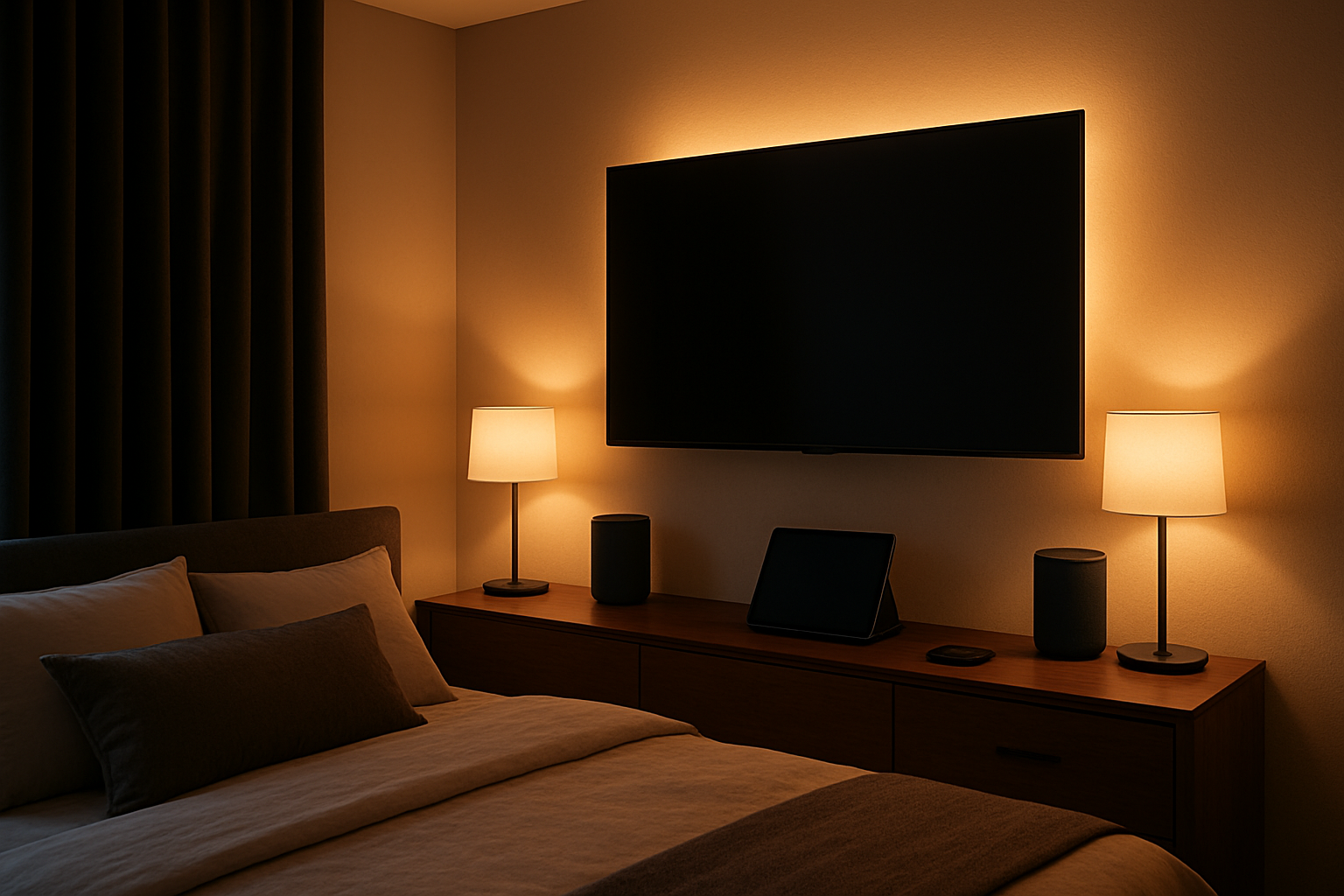
Ceiling-mounted Projectors for Immersive Viewing Experiences
Transforming your bedroom into a personal cinema has never been easier with today’s ceiling-mounted projector technology. These devices completely revolutionize how you consume entertainment, turning any wall or ceiling into a massive screen that makes even the largest TVs seem tiny by comparison.
Modern ceiling projectors deliver stunning 4K resolution with HDR support, creating visuals so crisp and vibrant that you’ll feel like you’re inside your favorite movies. The latest laser projectors eliminate the need for bulb replacements and provide consistent brightness for years. Brands like Epson, Sony, and BenQ offer models specifically designed for bedroom installation, with whisper-quiet operation that won’t disturb your peaceful environment.
Installation flexibility stands as one of the biggest advantages. You can project onto your ceiling for comfortable lying-down viewing, onto a wall for traditional watching, or even onto a retractable screen that disappears when not needed. Short-throw projectors work perfectly in compact bedrooms, producing massive images from just a few feet away.
Smart connectivity features mean these projectors integrate seamlessly with streaming services, gaming consoles, and mobile devices. Built-in Android TV or wireless casting capabilities let you access Netflix, Disney+, and YouTube without additional hardware. Many models include automatic keystone correction and focus adjustment, ensuring perfect picture geometry regardless of mounting angle.
The bedroom-specific benefits are remarkable. Late-night movie sessions become incredibly comfortable when you’re lying flat and looking up at the ceiling. No more neck strain from awkward TV viewing angles. The ambient lighting created by projectors is gentler on your eyes compared to bright TV screens, making them ideal for relaxing before sleep.
Consider models with lamp-free laser technology for the ultimate convenience. These projectors offer 20,000+ hour lifespans, instant on/off capability, and maintain color accuracy throughout their lifetime. The Epson LS11000 and Sony VPL-VW295ES represent the gold standard for home cinema projectors, while more budget-friendly options like the BenQ TK700STi deliver excellent performance for casual viewing.
Motorized ceiling mounts add another layer of sophistication, allowing you to adjust projection angles with remote control. Some advanced installations include automated screen deployment and ambient lighting dimming, creating a true theater experience with the press of a single button.
High-quality Sound Systems with Wireless Connectivity
Audio quality makes the difference between watching content and experiencing it. Bedroom sound systems have evolved far beyond basic TV speakers, offering immersive audio that transforms your personal space into an acoustic wonderland.
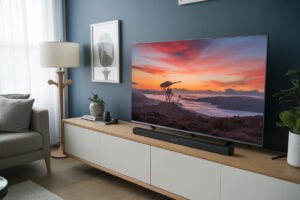
Wireless surround sound systems eliminate cable clutter while delivering theater-quality audio. Sonos Arc, Samsung HW-Q990B, and Bose Smart Soundbar 900 represent the pinnacle of bedroom audio technology. These systems use advanced signal processing to create virtual surround sound that fills your room with precisely positioned audio effects.
Dolby Atmos support takes bedroom entertainment to another level by adding height channels that create three-dimensional soundscapes. Overhead audio effects like helicopters flying by or rain falling feel incredibly realistic when you’re lying in bed. Object-based audio processing ensures that sounds move naturally around your room, matching the on-screen action perfectly.
Wireless subwoofers provide deep bass without the need for running cables across your bedroom floor. These units can be positioned anywhere in the room for optimal bass response, often tucked discretely under the bed or in a corner. Adaptive bass control prevents overwhelming low frequencies that might disturb neighbors or other household members during late-night viewing.
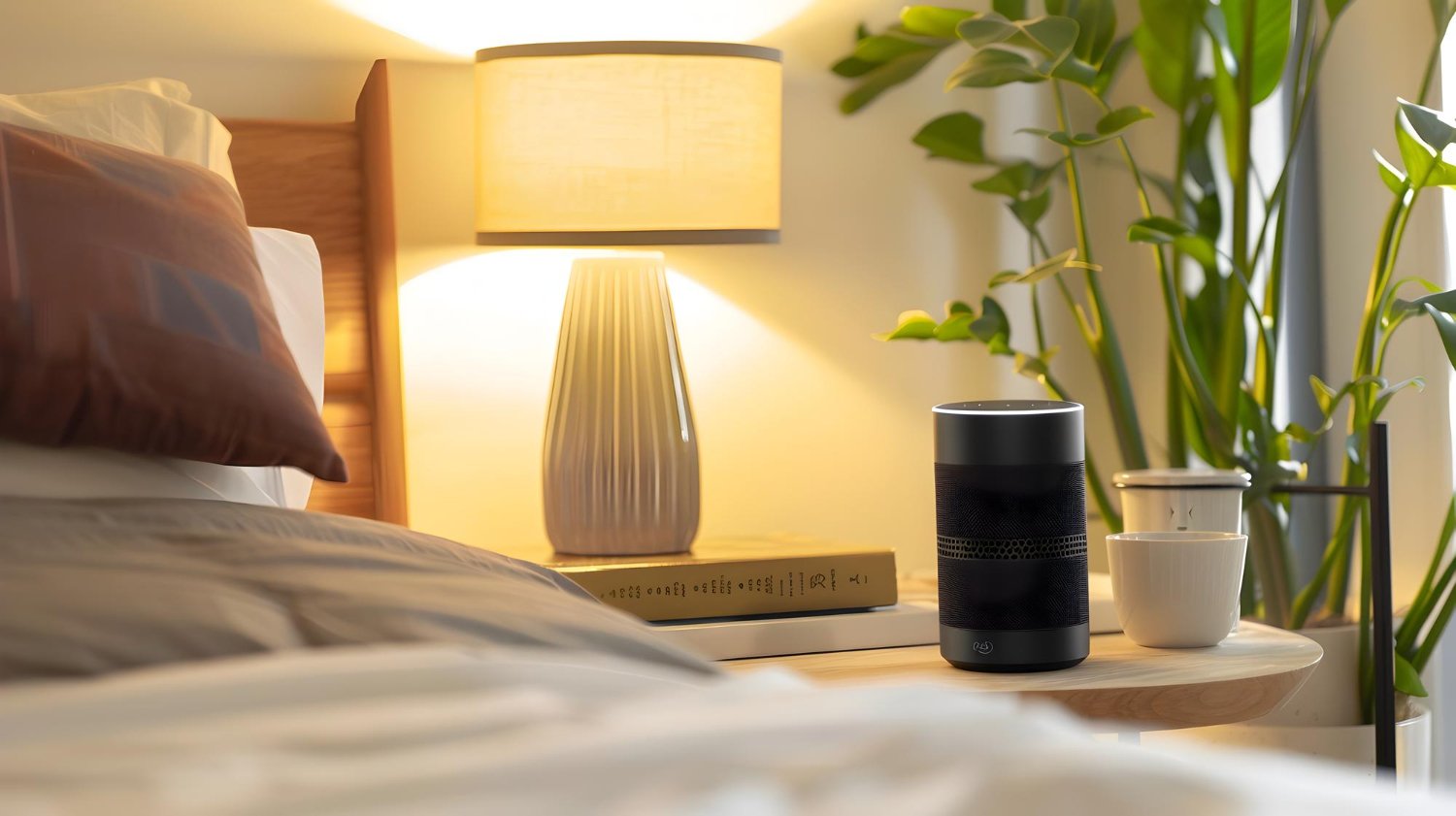
Multi-room audio capabilities mean your bedroom system integrates with speakers throughout your home. Start playing music while getting ready for bed, then seamlessly transfer the audio to your bedroom speakers. Voice control through Alexa, Google Assistant, or Siri makes operation effortless when your hands are full or you’re already comfortable in bed.
Bluetooth and Wi-Fi connectivity options provide maximum flexibility for audio sources. Stream directly from your phone, tablet, or laptop without quality loss. High-resolution audio codecs like LDAC and aptX HD preserve music quality for serious listening sessions. Some systems include dedicated streaming apps with access to Spotify, Apple Music, and audiophile services like Tidal.
Room correction technology automatically adjusts sound output based on your bedroom’s acoustics. Systems like the Bose Smart Soundbar 900 use built-in microphones to analyze room characteristics and optimize frequency response accordingly. This ensures consistent audio quality regardless of your room size, furniture placement, or wall materials.
Compact soundbars designed specifically for bedrooms offer impressive performance without overwhelming smaller spaces. The Sony HT-A3000 and JBL Bar 5.0 MultiBeam deliver wide soundstages from surprisingly small footprints. These systems often include wall mounting options that save valuable floor and surface space.
Wireless rear speakers extend the surround sound experience without permanent installation. Battery-powered options like the Sony SRS-RA5000 can be positioned temporarily for movie nights, then stored away to maintain bedroom aesthetics. This flexibility makes them perfect for renters or anyone who prefers minimalist bedroom design.
Reading Lights with Adjustable Brightness and Positioning
Proper lighting transforms reading from a strain-inducing activity into a thoroughly enjoyable experience. Modern reading lights combine ergonomic design with advanced LED technology to create perfect illumination for any book, tablet, or magazine.
Articulated arm reading lights offer infinite positioning possibilities, allowing you to direct light exactly where you need it. The Anglepoise Type 75 and Flos Goldman represent iconic designs that blend functionality with bedroom aesthetics. These lights feature smooth adjustment mechanisms that hold their position reliably, eliminating the frustration of constantly readjusting poorly designed fixtures.
LED technology has revolutionized reading light performance while dramatically reducing heat output and energy consumption. Modern LEDs produce 90% less heat than traditional incandescent bulbs, keeping you comfortable during extended reading sessions. The lifespan of quality LEDs exceeds 50,000 hours, meaning once installed, these lights will serve you for decades.
Color temperature adjustment capability stands as one of the most important features for bedroom reading lights. Warmer light temperatures (2700K-3000K) promote relaxation and prepare your body for sleep, while cooler temperatures (4000K-5000K) enhance alertness and reading clarity. Lights with tunable white LEDs let you adjust color temperature throughout the evening, supporting your natural circadian rhythms.
Dimming controls provide precise brightness adjustment for different reading materials and ambient lighting conditions. High-quality reading lights offer smooth dimming from 1% to 100% without flickering or color shifting. Touch-sensitive dimming controls built into the light fixture eliminate the need for separate switches or remotes.
Clip-on reading lights offer ultimate versatility for readers who like to change positions frequently. The LuminoLite LED Reading Light and Glocusent LED Reading Light attach securely to books, tablets, or bed frames without causing damage. These portable options are perfect for travel and can adapt to any sleeping arrangement.
Built-in USB charging ports add practical functionality to bedside reading lights. Models like the TaoTronics LED Desk Lamp combine illumination with device charging capability, reducing bedside clutter while keeping your phone or tablet powered for late-night reading sessions.
Swing-arm wall-mounted reading lights save valuable nightstand space while providing excellent light coverage. The WAC Lighting Swing Arm Sconce and Artemide Tolomeo Wall models offer professional-grade illumination with architectural appeal. These fixtures can be positioned away from your reading area when not needed, maintaining clean bedroom lines.
Memory functions in premium reading lights remember your preferred brightness and color temperature settings. The Dyson Lightcycle and BenQ e-Reading Lamp automatically adjust throughout the day based on your location and time, providing optimal reading conditions without manual adjustment.
Anti-glare technologies reduce eye strain during extended reading sessions. Properly designed reading lights distribute illumination evenly across the page while preventing harsh shadows or bright spots. Lights with multiple LED arrays or diffusion panels create comfortable, uniform lighting that reduces visual fatigue.
Wireless control capabilities add convenience for readers who frequently adjust lighting while comfortable in bed. Smartphone apps allow fine-tuning of brightness, color temperature, and timer functions without reaching for physical controls. Some systems integrate with smart home platforms, enabling voice control through Alexa or Google Assistant.
Task lighting optimization ensures your reading light complements rather than competes with ambient bedroom lighting. Quality reading lights provide sufficient illumination for comfortable reading while maintaining a cozy atmosphere conducive to relaxation. This balance prevents the harsh, clinical feeling that can disrupt your bedroom’s peaceful ambiance.
Health and Wellness Bedroom Additions
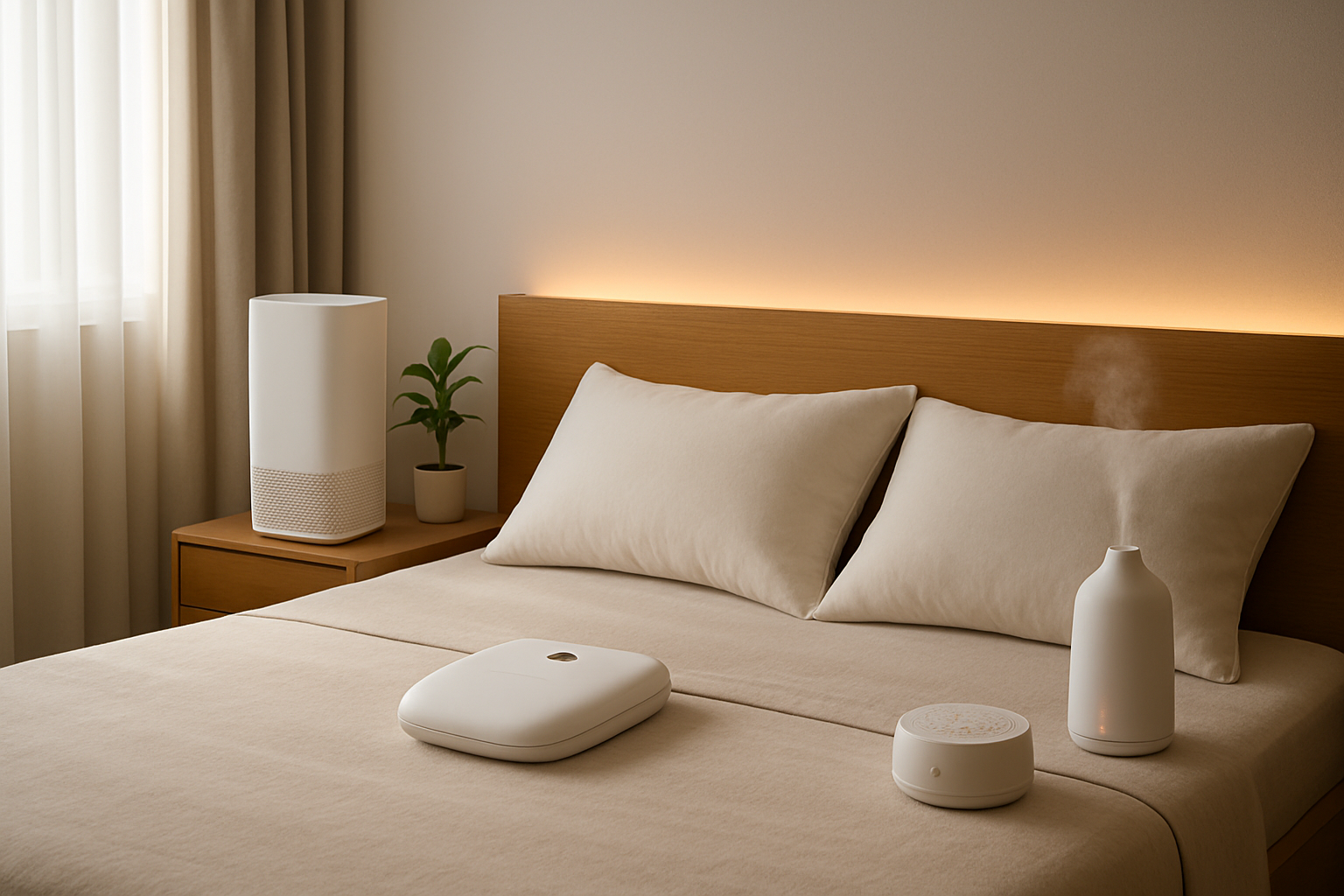
Air Purifiers for Cleaner Breathing Environment
The quality of air you breathe while sleeping directly impacts your rest quality and overall health. Modern bedrooms face numerous air quality challenges, from dust mites and pet dander to volatile organic compounds (VOCs) released by furniture and cleaning products. Air purifiers have become essential bedroom companions for anyone serious about creating a healthier sleep environment.
HEPA filtration stands as the gold standard for bedroom air purification. These filters capture 99.97% of particles as small as 0.3 microns, effectively removing allergens, dust, and microscopic pollutants that can trigger respiratory issues. The Dyson Pure Cool TP04 combines HEPA filtration with activated carbon layers, targeting both particles and gases while doubling as a cooling fan during warmer months.
Quiet operation becomes crucial when selecting bedroom air purifiers. The Levoit Core 300 operates at whisper-quiet levels below 24 decibels, making it virtually inaudible during sleep. Many users report improved morning congestion and reduced allergy symptoms within weeks of consistent use.
Smart air purifiers offer real-time air quality monitoring through connected apps. The Molekule Air Pro tracks pollutant levels throughout the day, automatically adjusting filtration intensity based on detected contaminants. This technology helps users understand their bedroom’s air quality patterns and optimize purification schedules.
Room size matching ensures optimal performance. Compact models like the GermGuardian AC4825 work perfectly for bedrooms up to 167 square feet, while larger spaces benefit from units like the Winix 5500-2, which handles areas up to 360 square feet effectively.
Consider maintenance requirements when choosing air purifiers. Filter replacement costs and frequencies vary significantly between models. Some units feature washable pre-filters that extend main filter life, reducing long-term operating expenses.
Activated carbon filters excel at removing odors and chemical vapors. Bedrooms near busy roads or industrial areas particularly benefit from this technology, as do homes with new furniture or recent renovations that may release harmful chemicals.
Essential Oil Diffusers for Aromatherapy Benefits
Aromatherapy transforms bedrooms into personal wellness sanctuaries, with essential oil diffusers serving as the gateway to therapeutic scent experiences. These devices disperse natural plant essences that can promote relaxation, improve sleep quality, and create personalized atmospheric environments.
Ultrasonic diffusers represent the most popular bedroom choice, using vibrations to create fine mist without heat. The URPOWER Essential Oil Diffuser runs for up to 10 hours continuously, perfect for all-night aromatherapy sessions. These units preserve the therapeutic properties of essential oils by avoiding heat degradation.
Nebulizing diffusers deliver the purest aromatherapy experience by dispersing undiluted essential oils as micro-particles. The Organic Aromas Raindrop diffuser creates potent scent experiences without water or heat, though they consume oils more quickly than ultrasonic alternatives.
Sleep-promoting essential oils work synergistically with bedroom environments. Lavender remains the most researched sleep aid, with studies showing significant improvements in sleep quality and duration. Chamomile offers gentle sedative effects, while bergamot helps reduce anxiety and stress that can interfere with sleep.
Timer functionality allows precise control over aromatherapy sessions. Many diffusers feature intermittent modes that alternate between misting and rest periods, extending oil usage while maintaining consistent scent levels. The InnoGear Essential Oil Diffuser offers four timer settings and automatic shut-off when water levels run low.
Color therapy integration adds visual wellness elements to aromatherapy routines. LED lighting in diffusers can cycle through colors or remain fixed on preferred hues. Warm amber tones support natural melatonin production, while cool blues create calming atmospheres.
Coverage area consideration ensures proper scent distribution. Small ultrasonic diffusers effectively cover bedrooms up to 300 square feet, while larger reed diffusers or nebulizing units handle spaces up to 800 square feet without overwhelming occupants.
Maintenance simplicity matters for consistent use. Weekly cleaning with white vinegar prevents oil buildup and bacterial growth. Models with wide openings and smooth interiors simplify cleaning routines, encouraging regular maintenance.
Seasonal oil blending creates year-round wellness programs. Spring allergies respond well to eucalyptus and peppermint combinations, while winter months benefit from warming cinnamon and orange blends that combat seasonal mood changes.
UV Sanitizing Devices for Bedding and Personal Items
Ultraviolet sanitization brings hospital-grade disinfection technology into personal bedrooms, eliminating bacteria, viruses, and dust mites from surfaces that traditional cleaning methods often miss. These devices offer chemical-free sanitization that’s particularly valuable for individuals with sensitive skin or respiratory conditions.
UV-C light at 254 nanometers wavelength proves most effective for destroying microorganisms. The CleanSlate UV Sanitizer uses this specific wavelength to eliminate 99.9% of germs from phones, keys, jewelry, and other small personal items within minutes. Regular sanitization of frequently touched items reduces pathogen transmission and maintains cleaner bedroom environments.
Handheld UV wands provide flexibility for sanitizing larger items like pillows, mattresses, and upholstered furniture. The Verilux CleanWave Sanitizing Wand requires slow, methodical movement across surfaces to ensure adequate exposure time. These devices work particularly well for sanitizing hotel bedding during travel or treating items that cannot be machine washed.
Enclosed UV sanitizing chambers offer safety advantages by containing harmful UV radiation. The HoMedics UV-Clean Sanitizer Bag accommodates items up to phone size while preventing accidental UV exposure. These chambers typically complete sanitization cycles within 5-10 minutes and automatically shut off when opened.
CPAP equipment sanitization addresses specific needs of sleep apnea patients. The SoClean 2 CPAP Cleaner uses activated oxygen to sanitize masks, tubing, and water chambers without requiring disassembly. This technology eliminates the need for daily manual cleaning while ensuring equipment remains free from harmful microorganisms.
Safety considerations require careful attention when using UV sanitizing devices. Direct UV-C exposure can cause skin burns and eye damage. Quality devices include safety interlocks that prevent operation when lids are open or when sensors detect human presence nearby.
Effectiveness depends on proper usage techniques. Items must be positioned to allow direct UV light contact with all surfaces requiring sanitization. Shadows and folds in fabric can harbor microorganisms if not properly exposed. Multiple positions or extended exposure times may be necessary for comprehensive sanitization.
Surface compatibility varies among materials. UV light can degrade certain plastics, fabrics, and colored materials over time. Testing on inconspicuous areas before full sanitization helps identify potential damage risks. Generally, hard surfaces like metal, glass, and most electronics tolerate UV exposure well.
Maintenance requirements remain minimal for most UV sanitizing devices. Bulb replacement typically occurs annually with moderate use, while cleaning exterior surfaces with standard disinfectants maintains optimal performance. Some units include bulb life indicators that alert users when replacement becomes necessary.
Massage Devices for Muscle Tension Relief
Sleep quality directly correlates with physical comfort, making muscle tension relief an essential component of bedroom wellness. Modern massage devices bring professional-grade therapeutic benefits into personal spaces, addressing everything from daily stress accumulation to chronic pain conditions that interfere with restful sleep.
Percussive massage guns have revolutionized at-home muscle recovery. The Theragun Elite delivers up to 2,400 percussions per minute across four customizable speed settings, effectively breaking up muscle knots and improving circulation before bedtime. These devices target specific muscle groups with precision, making them ideal for addressing tension hot spots that develop throughout the day.
Massage pillows integrate seamlessly into bedroom environments while providing targeted relief. The Zyllion Shiatsu Back and Neck Massager features rotating massage nodes that mimic professional massage techniques. These pillows work effectively while reading, watching television, or during pre-sleep relaxation routines.
Foot massage devices address often-overlooked areas that significantly impact overall comfort. The Human Touch Reflex SOL Foot and Calf Massager uses air compression and rolling massage to relieve tension from long days on your feet. Regular foot massage improves circulation and can reduce restless leg symptoms that interfere with sleep onset.
Full-body massage chairs represent the ultimate in bedroom luxury and therapeutic benefit. The Kahuna LM6800 features zero-gravity positioning, heat therapy, and multiple massage programs that can be customized for evening relaxation routines. While representing a significant investment, these chairs provide comprehensive muscle tension relief that rivals professional massage sessions.
Heating elements enhance massage effectiveness by promoting muscle relaxation and improved blood flow. Many massage devices incorporate infrared or traditional heating components that warm tissues during treatment. The Pure-Wave CM7 combines percussion massage with soothing heat therapy for comprehensive muscle relief.
Portability considerations matter for travelers and those with limited bedroom space. Compact devices like the Fit King Air Compression Leg Massager provide effective relief while packing easily for business trips or vacation use. These portable options ensure consistent muscle care regardless of location.
Intensity customization allows users to tailor massage experiences to personal preferences and sensitivity levels. Devices with multiple speed and pressure settings accommodate both gentle relaxation and deep tissue work. The Naipo Back Massager offers three-speed settings and directional controls for personalized treatment.
Recovery timing optimization enhances sleep preparation routines. Using massage devices 30-60 minutes before bedtime allows the relaxation response to fully develop while avoiding overstimulation that might interfere with sleep onset. Many users report falling asleep more quickly and experiencing fewer sleep interruptions after establishing regular pre-bedtime massage routines.
Battery life and charging convenience affect consistent device usage. Models with extended battery life or quick-charge capabilities ensure availability when needed most. Some devices include wireless charging bases that integrate elegantly with bedroom nightstand setups.
Noise levels become important for shared sleeping spaces. Quieter massage devices allow for evening use without disturbing partners or family members. The Renpho Deep Tissue Massage Gun operates at reduced noise levels while maintaining therapeutic effectiveness.
Professional consultation can optimize device selection for specific conditions. Physical therapists and massage therapists often provide recommendations based on individual muscle tension patterns and therapeutic goals. This guidance helps ensure chosen devices address actual needs rather than generic relaxation purposes.