
Affiliate disclosure: PremiumHomeGadgets.com is reader-supported. As an Amazon Associate I earn from qualifying purchases. If you buy through links on this page, I may earn a small commission at no extra cost to you. This never changes which products I recommend.
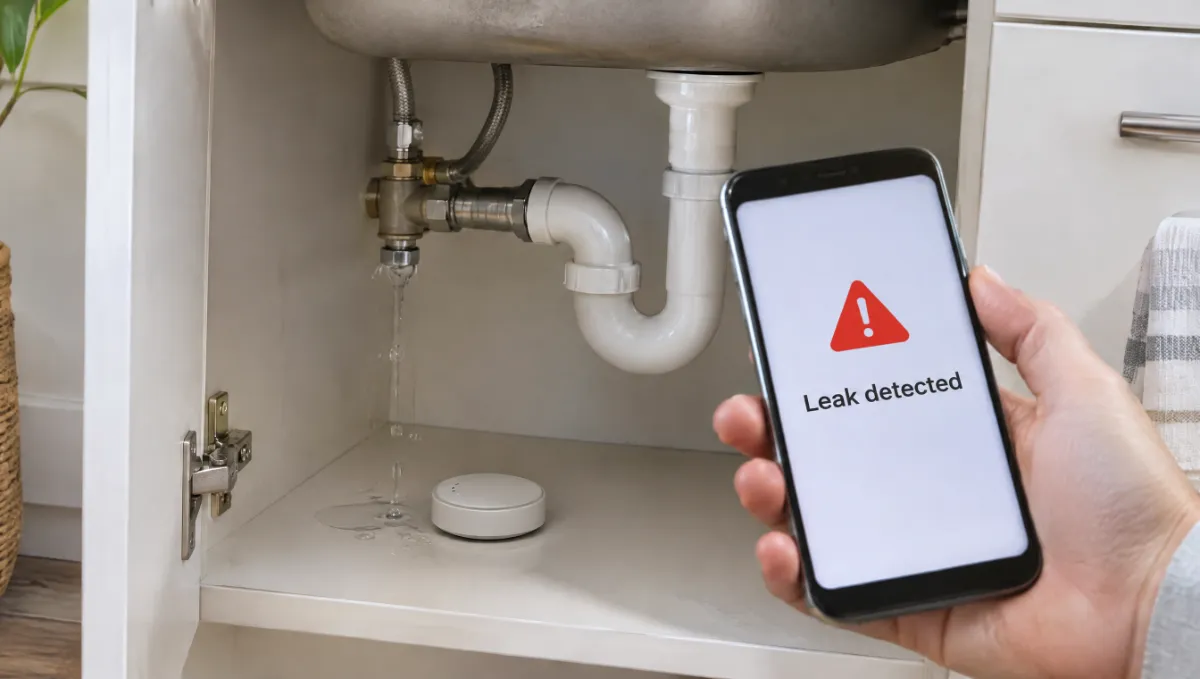
A burst pipe or a failed water heater rarely announces itself. Water spreads quietly under cabinets, into subfloors, and down basement walls, and by the time you notice it, the repair bill has already grown. The good news is that one of the cheapest smart home gadgets you can buy is also one of the most practical: a smart water leak detector.
In this guide I compare the best water leak detectors for 2026, from budget sensors that cost about $20 each to whole-home systems that can shut off your water automatically. I also explain which ones warn you about freezing temperatures, which need a hub, and exactly where to place them so they actually catch a leak.
How I chose these picks: I compared manufacturer specifications, setup requirements, alert options, and smart home compatibility for each product, and checked current pricing at official stores and major retailers. I have not lab-tested these devices; this is a research-based buying guide, and every specification below comes from the manufacturer or a retailer listing. Prices were checked on November 18, 2026 and change often, so confirm the current price before you buy.
Quick Picks: The Best Water Leak Detectors at a Glance
- Best overall: YoLink Water Leak Sensor 4: long-range, loud siren, freeze warnings
- Best Wi-Fi detector with no hub: First Alert L1 Wi-Fi Water Leak and Freeze Detector
- Best budget multi-pack: Govee Wi-Fi Water Sensor
- Best for temperature and humidity monitoring: Moen Smart Leak Detector
- Best for Apple Home and Matter users: Aqara Water Leak Sensor T1
- Best for Ring Alarm owners: Ring Alarm Flood and Freeze Sensor
- Best automatic water shutoff: Moen Flo Smart Water Monitor and Shutoff
- Best whole-home monitor with no plumbing work: Flume 2 Smart Home Water Monitor
Why a Water Leak Detector Is Worth It
Water damage is one of the most common reasons people file a homeowners insurance claim. According to the Insurance Information Institute, water damage and freezing claims averaged about $15,400 per claim between 2019 and 2023, and roughly 1.5 out of every 100 insured homes filed one each year. Only wind and hail claims were more frequent.
Not every leak is dramatic. The U.S. Environmental Protection Agency’s WaterSense Fix a Leak Week program estimates that household leaks can waste nearly 10,000 gallons of water per home each year. A slow drip under a sink or behind a washing machine can go unnoticed for months, causing mold, rotted cabinets, and a higher water bill.
A leak detector costs far less than a single plumber visit. It will not stop a pipe from breaking, but it gives you the one thing that limits the damage: time to act.
Comparison Table: Best Smart Water Leak Detectors (2026)
| Product | Best for | Connection | Hub needed? | Freeze / temp alerts | Local alarm | Approx. price* |
|---|---|---|---|---|---|---|
| YoLink Water Leak Sensor 4 | Best overall | LoRa to hub | Yes (YoLink hub) | Yes | 105 dB | About $20 per sensor; hub kits sold separately |
| First Alert L1 Wi-Fi Leak and Freeze Detector | No-hub Wi-Fi | Wi-Fi | No | Yes, plus humidity | 100 dB | $59.99 (no cable) / $69.99 (with cable) |
| Govee Wi-Fi Water Sensor | Budget multi-pack | Wi-Fi gateway (2.4 GHz) | Gateway included in kits | Not advertised | Up to 100 dB, adjustable | Check current price |
| Moen Smart Leak Detector | Temp and humidity monitoring | Wi-Fi | No | Yes, plus humidity | Yes | About $49 |
| Aqara Water Leak Sensor T1 | Apple Home / Matter | Zigbee 3.0 | Yes (Aqara hub) | No | Through the hub | Check current price |
| Ring Alarm Flood and Freeze Sensor | Ring Alarm owners | Z-Wave | Yes (Ring Alarm Base Station) | Yes (below 40°F) | Through the Base Station | $34.99 |
| Moen Flo Smart Water Monitor and Shutoff | Automatic shutoff | Wi-Fi (2.4 GHz) | No | Monitors the water line | No (app, text, call, email) | About $560–$680, plus installation |
| Flume 2 Smart Home Water Monitor | No-plumbing whole-home monitor | Wi-Fi bridge | Bridge included | No | No (app alerts) | $249 list, often on sale |
The 8 Best Water Leak Detectors, Reviewed
1. YoLink Water Leak Sensor 4: Best Overall
YoLink’s sensors use LoRa, a long-range radio, instead of regular Wi-Fi. YoLink rates the range at up to a quarter mile in open air, which makes these sensors a strong choice for basements, detached garages, and far corners of a large house where Wi-Fi sensors often drop out.
The Water Leak Sensor 4 adds two features the original YoLink sensor lacks: a built-in 105 dB siren and low-temperature alerts that warn you about conditions that can lead to frozen pipes. Alerts can reach you by app push notification, text message, and email. It runs on two AAA batteries and works with Alexa, IFTTT, and Home Assistant.
- Pros: excellent range, loud local alarm, freeze warnings, low cost per sensor, text alerts
- Cons: requires a YoLink hub; some owners find the app settings confusing at first
- Good to know: buy a starter kit that includes the hub unless you already own one.
2. First Alert L1 Wi-Fi Water Leak and Freeze Detector: Best Wi-Fi Detector With No Hub
If you want a detector that connects straight to your home Wi-Fi with no extra hub, the First Alert L1 is one of the most complete options. Its standout feature is a 5-foot sensing cable that detects water along its entire length, so you can loop it around a water heater, under a row of appliances, or along a basement wall. First Alert says you can add extra cables to extend the sensor length up to 500 feet.
The L1 also monitors temperature and humidity, sends alerts when either goes outside the range you set, and sounds a 100 dB alarm on the device itself. It runs on two AA batteries and can be reused after a leak once the cable is dry. Some insurers already work with it: USAA, for example, has offered members discounts on this detector through its PERKS program, and eligible policyholders can enroll it for a connected-home discount.
- Pros: no hub needed, long sensing cable, freeze and humidity alerts, loud alarm
- Cons: works only inside the First Alert/Resideo app, with no Alexa, Google Home, or Apple Home support; extension cables cost extra
- Price: $59.99 without the cable, $69.99 with the cable (First Alert’s store, Nov. 2026)
3. Govee Wi-Fi Water Sensor: Best Budget Multi-Pack
Govee’s kit pairs several battery-powered water sensors with a small Wi-Fi gateway that plugs into an outlet. One gateway supports up to 10 sensors, which makes it an affordable way to cover every sink, toilet, and appliance in the house. Each sensor has an adjustable alarm up to 100 dB, so you can make it loud in the basement and quieter in a bedroom bathroom, and alerts reach your phone through the Govee Home app and email.
- Pros: low cost per sensor, gateway included in kits, adjustable alarm volume
- Cons: gateway works only with 2.4 GHz Wi-Fi; freeze alerts are not advertised for this kit
- Good to know: Govee’s gateway only pairs with its matching sensors, so buy add-on sensors from the same product line. Govee also sells a newer GoveeLife Water Leak Detector 1s with a 105 dB alarm and longer range, if you want an upgrade.
4. Govee Wi-Fi Water Sensor: Best Budget Multi-Pack
Moen’s Smart Leak Detector is a standalone Wi-Fi sensor that watches for three things: water, temperature, and humidity. That makes it useful beyond leaks: humidity alerts can warn you about mold-friendly conditions in a basement, and low-temperature alerts help you catch a cold crawl space before pipes freeze.
Alerts can arrive through the Moen Smart Water app, text, phone call, or email, and the detector also sounds an audible alarm and flashes an LED. A 48-inch remote sensing disc is included, so you can mount the main unit on a wall and slide the disc into a tight space behind a dishwasher or under a water heater. It runs on one CR123A lithium battery that Moen rates for up to two years. If you later add a Moen Flo shutoff valve (pick #7), the detector can trigger an automatic shutoff.
- Pros: no hub, temperature and humidity tracking, phone-call alerts, remote sensing disc
- Cons: costs more per sensor than budget options; one-year warranty
5. Aqara Water Leak Sensor T1: Best for Apple Home and Matter Users
Aqara’s tiny Zigbee sensor is popular with people who already run an Aqara hub, because it can appear in Apple Home and, through a compatible Aqara hub, in Matter-based setups. It triggers when water reaches just 0.5 mm, carries an IP67 dust and water resistance rating, and runs on a CR2032 coin battery rated for up to two years.
- Pros: very small, highly sensitive, inexpensive, strong automation options with an Aqara hub
- Cons: requires an Aqara hub; no freeze alerts; the alarm sounds on the hub, not on the sensor
- Good to know: with an Aqara smart plug and a solenoid water valve, it can be set up to shut off water automatically.
6. Ring Alarm Flood and Freeze Sensor: Best for Ring Alarm Owners
If you already have a Ring Alarm system, this is the easiest add-on. The sensor connects to the Ring Alarm Base Station over Z-Wave and sends an alert when it detects water or when the temperature drops below 40°F. The Base Station also gives an audible alert. Ring rates the replaceable lithium battery for up to three years.
- Pros: simple, tool-free setup; freeze alerts; works with optional Ring professional monitoring
- Cons: requires a Ring Alarm or Ring Alarm Pro Base Station. It will not work with Ring doorbells or cameras alone.
- Price: $34.99 (Ring store, Nov. 2026)
7. Moen Flo Smart Water Monitor and Shutoff: Best Automatic Water Shutoff
Leak sensors tell you there is a problem. The Moen Flo can stop it. It installs on your home’s main water line, monitors flow and pressure, and can automatically shut off the water when it detects a leak or burst pipe, even when you are away. You can also turn the water off remotely from the Moen Smart Water app, and it works with Ring, Google Assistant, and Alarm.com.
It comes in three sizes for 3/4-inch, 1-inch, and 1-1/4-inch pipes. It needs a power outlet near the main line and 2.4 GHz Wi-Fi, and Moen recommends professional installation. An optional FloProtect subscription adds a 5-year extended warranty and up to $5,000 toward your homeowners insurance deductible if you have water damage with the device installed.
- Pros: automatic shutoff, whole-home leak detection, usage tracking, possible insurance discounts
- Cons: expensive; installation adds cost; needs a nearby outlet
- Price: roughly $560–$680 depending on size and retailer, before installation
8. Flume 2 Smart Home Water Monitor: Best Whole-Home Monitor With No Plumbing Work
Flume takes a different approach. Instead of sitting on the floor, its sensor straps onto your existing water meter, and a Wi-Fi bridge inside the house sends your usage data to the Flume app. That lets it spot leaks anywhere on the property, including a running toilet or a broken irrigation line, without cutting a single pipe.
- Pros: easy installation, whole-home coverage, water-use tracking, Alexa and Google Home support
- Cons: cannot shut off water; no local alarm; requires a compatible water meter you can reach
- Good to know: check Flume’s meter compatibility tool before buying, and ask your water utility about rebates. Some offer them.
Leak Sensor vs. Smart Water Shutoff Valve: Which Do You Need?
Most homes start with spot sensors and add a shutoff valve later. Here is the simple way to decide:
- Spot leak sensors (YoLink, First Alert, Govee, Moen detector, Aqara, Ring) sit next to a specific risk such as a water heater or dishwasher. They are cheap, take minutes to set up, and are renter-friendly. Their limit: they only detect water that reaches them.
- Whole-home monitors (Flume 2) read your water meter and notice unusual flow anywhere, but cannot stop the water.
- Automatic shutoff valves (Moen Flo) watch the main line and close it when something goes wrong. They offer the strongest protection, especially for vacation homes or frequent travelers, but cost the most and usually need a plumber.
For many homeowners, a few spot sensors in high-risk areas give the best value. If you travel often in winter or own a second home, pairing sensors with a shutoff valve is worth considering.
How to Choose the Best Water Leak Detector
Hub or no hub
Wi-Fi detectors such as the First Alert L1 and Moen Smart Leak Detector connect directly to your router. Hub-based systems (YoLink, Aqara, Ring) need a separate base station, but they often offer better range and longer battery life. If you already own one of those hubs, choose sensors that work with it.
Freeze and temperature alerts
If you live in a cold-winter state, or your pipes run through an unheated basement, garage, or crawl space, choose a detector with low-temperature alerts. In this guide, the YoLink Sensor 4, First Alert L1, Moen Smart Leak Detector, and Ring Flood and Freeze Sensor all offer them.
Local alarm volume
A loud on-device siren matters if your internet goes down or you are home but not checking your phone. Look for sensors rated around 100 dB or higher.
Alert options
Push notifications are standard. Text messages, email, and phone calls (YoLink and Moen offer some of these) are useful backups when you are traveling or your phone is on silent.
Coverage area
A puck sensor only detects water that touches its contacts. For a wide area such as a laundry room floor or the base of a water heater, a sensing cable (First Alert L1) or remote sensing disc (Moen) covers more ground.
Smart home compatibility
Check which apps and voice assistants you already use. Aqara suits Apple Home and Matter setups, Ring suits Ring Alarm owners, and YoLink works with Alexa and Home Assistant. If you use smart smoke alarms too, keeping devices in one app makes alerts easier to manage. See my guide to the best smart smoke and carbon monoxide detectors for options that pair well with a leak-monitoring setup.
Where to Place Water Leak Sensors
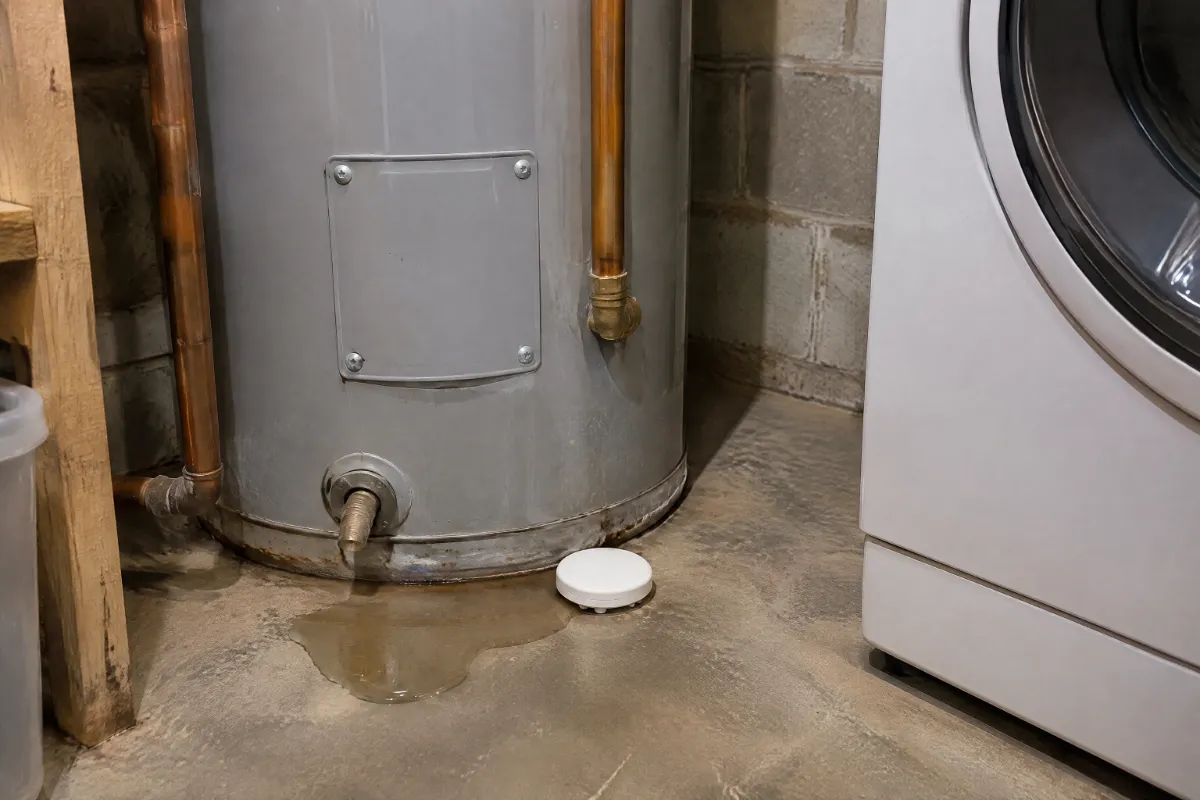
Put sensors where water is most likely to appear first, not just where it is most likely to end up:
- Next to the water heater: tanks eventually fail, often at the bottom.
- Behind or beside the washing machine: supply hoses are a common failure point.
- Under the kitchen sink and near the dishwasher
- Under bathroom sinks and beside toilets
- Near the sump pump, if you have one
- Behind the refrigerator, if it has an ice maker or water line
- Near the HVAC unit or furnace, where condensate lines can clog and overflow
- In unheated areas with pipes (basement walls, crawl spaces, garages). Use a model with freeze alerts here.
Place sensors flat on the floor with the metal contacts facing down, and test each one after setup by touching the contacts with a damp paper towel.
Winter Tips to Prevent Frozen Pipes
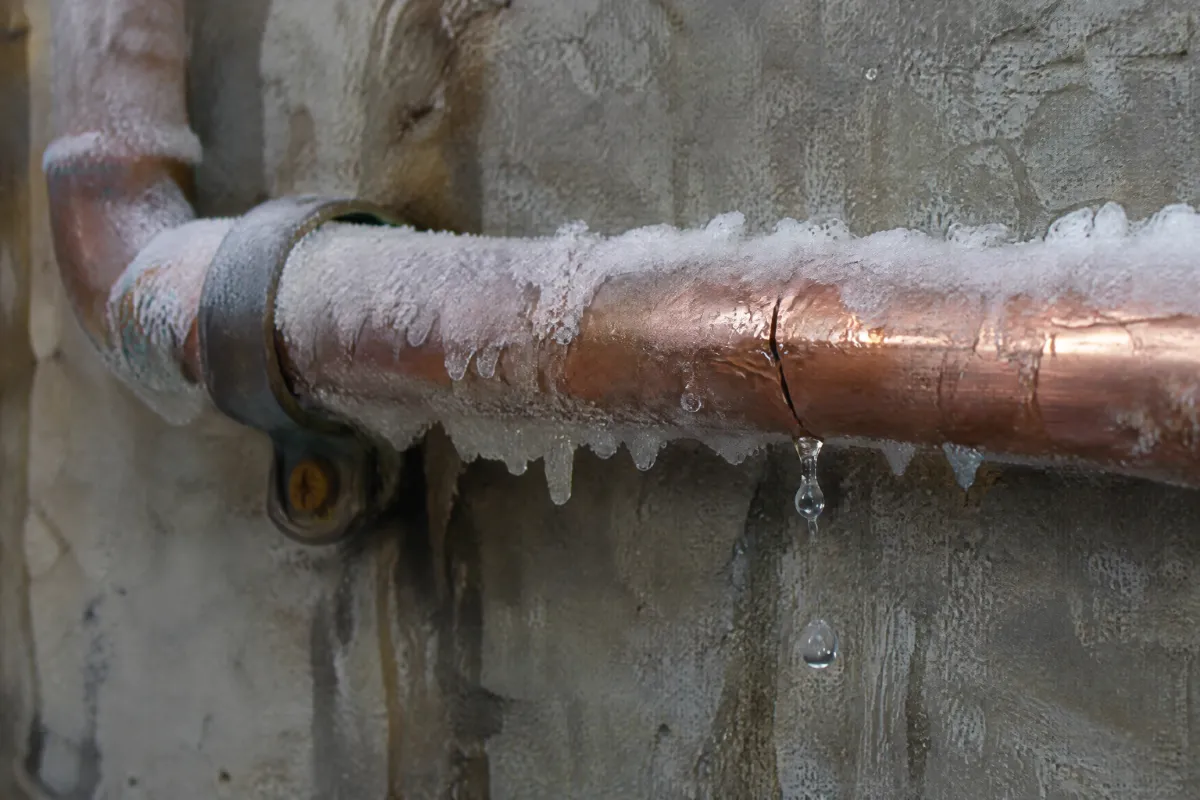
A freeze alert gives you warning, but prevention still matters. The American Red Cross recommends these steps during cold weather:
- If you go away, leave the heat on and set it no lower than 55°F.
- Keep the thermostat at the same temperature day and night during a cold snap.
- Open kitchen and bathroom cabinet doors so warm air reaches the pipes.
- Let cold water drip from faucets served by exposed pipes.
- Keep garage doors closed if water lines run through the garage.
- Drain and shut off outdoor hose bibs before winter.
Know where your main water shutoff valve is, and make sure everyone in the house knows too. When a leak alert arrives, closing that valve is the fastest way to limit damage.
Power outage tip: battery-powered sensors keep sounding their local alarm during an outage, but Wi-Fi alerts and hubs stop working when your router loses power. A small portable power station can keep your router and hub online. My Jackery 1000 comparison explains which models suit home backup.
Frequently Asked Questions
Do smart water leak detectors really work?
Yes, for the job they are designed for. A spot sensor reliably detects water that reaches its contacts or sensing cable and alerts you right away. It cannot detect a leak somewhere else in the house, so place sensors at the most likely leak sources, or add a whole-home monitor or shutoff valve for wider coverage.
Do I need a hub for a water leak detector?
Not always. Wi-Fi models such as the First Alert L1 and Moen Smart Leak Detector connect directly to your router. YoLink, Aqara, and Ring sensors need their own hub or base station, and Govee kits include a gateway.
Can a water leak detector warn me about frozen pipes?
Some can. Models with temperature sensors, such as the YoLink Water Leak Sensor 4, First Alert L1, Moen Smart Leak Detector, and Ring Flood and Freeze Sensor, alert you when the temperature drops to a risky level. That gives you time to add heat before a pipe freezes.
Where is the best place to put a water leak sensor?
Start with the water heater, washing machine, kitchen sink and dishwasher, bathroom sinks and toilets, sump pump, and refrigerator water line. Put sensors flat on the floor where water would collect first.
Will a leak detector lower my home insurance?
It might. Some insurers offer discounts or device programs for leak detection and automatic shutoff systems. Ask your insurer which devices qualify before you buy.
Do leak detectors work without Wi-Fi or during a power outage?
Most battery-powered sensors still sound their local alarm during an outage. Remote phone alerts need a working internet connection, so they stop if your router or hub loses power.
How long do the batteries last?
It depends on the model. Moen rates its Smart Leak Detector for up to two years, Aqara rates the T1 for up to two years, and Ring rates its Flood and Freeze Sensor for up to three years. Most apps warn you when batteries run low.
What is the difference between a leak sensor and a smart water shutoff valve?
A leak sensor detects water in one spot and alerts you. A smart shutoff valve, such as the Moen Flo, installs on your main water line and can automatically turn off the water to your entire home when it detects a leak.
Final Verdict: Which Water Leak Detector Should You Buy?
For most homes, the YoLink Water Leak Sensor 4 offers the best mix of range, a loud siren, freeze warnings, and low cost per sensor, as long as you are comfortable adding a hub. If you prefer a no-hub Wi-Fi detector with a long sensing cable, choose the First Alert L1. On a tight budget, the Govee kit covers many spots for little money. And if you want your home protected even when you are not there to react, the Moen Flo shutoff valve is the strongest option.
Whichever you choose, put the first sensors next to your water heater and washing machine this week, before the coldest weather arrives. For more ideas on protecting your home, browse my Home Safety guides or see my list of the best home gadgets for homeowners.
Prices and availability were checked on November 18, 2026 and are subject to change. Product specifications come from manufacturer and retailer listings.